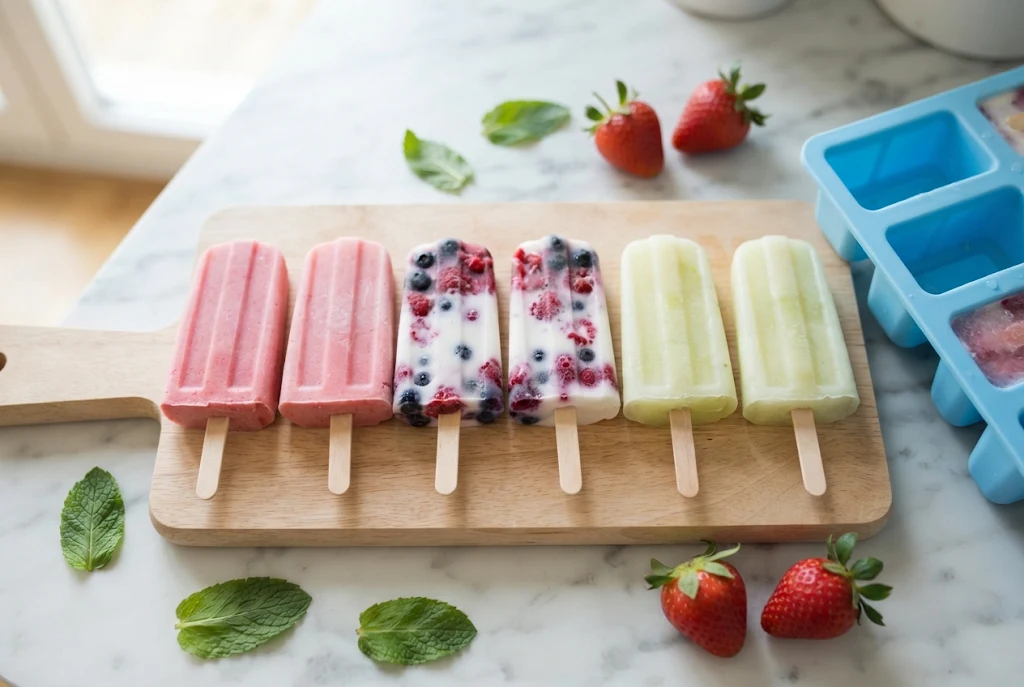
An Eispop is the German name for an ice pop: a flavoured liquid frozen solid on a stick, the same thing most people in Germany also call Eis am Stiel. You don’t need an ice cream machine or any special skill to make one. If you have a freezer, a mould and some fruit, you can have a tray of homemade pops ready by tonight.
Here’s the short version. Blend or mix your base, sweeten it a little more than tastes right at room temperature, pour it into moulds with about 1 cm of space at the top, add sticks, and freeze for 4 to 6 hours (overnight is safest). To release them, hold the mould under warm water for 10 to 20 seconds.
The rest of this guide explains why each step matters, so your first batch comes out smooth and easy to unmould instead of rock hard and stuck.
Quick Answer: How to Make an Eispop
- Prepare about 400 to 500 ml of base (fruit purée, juice, yoghurt or a mix).
- Sweeten and add a squeeze of lemon juice, then taste.
- Pour into moulds, leaving roughly 1 cm free at the top.
- Freeze for 45 to 60 minutes, then insert sticks if your mould has no lid holder.
- Freeze until solid, usually 4 to 6 hours.
- Run warm water over the outside of the mould and pull gently.
That’s the whole method. The details below are what separate a decent ice pop from a really good one.
What You Need Before You Start
Equipment
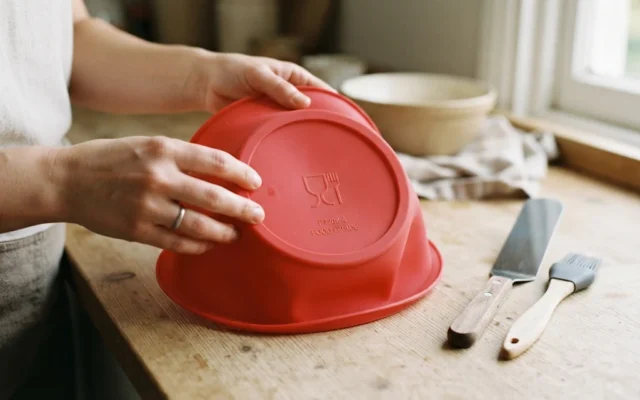
- Ice pop moulds. Silicone moulds release easily and handle a bit of bending. Rigid plastic moulds with built-in stick holders keep sticks straight. Stainless steel moulds last for years but cost more.
- Sticks. Wooden sticks or reusable plastic ones. Wooden sticks grip the frozen pop better.
- A jug with a spout. Pouring from a bowl is messy and causes air bubbles.
- A blender or hand blender. Only needed if you’re using whole fruit.
- A fine sieve. Optional, for removing seeds from raspberries or blackberries.
No moulds yet? Small yoghurt pots, paper cups or shot glasses work fine. Cover the top with foil, poke the stick through the centre, and the foil holds it upright while it freezes.
Ingredients
Every good ice pop has four parts:
- A base: fruit, juice, yoghurt, milk or coconut milk
- A sweetener: sugar, syrup or honey (more on honey and babies below)
- Acid: usually lemon or lime juice, which makes fruit flavours taste brighter
- A tiny pinch of salt: optional, but it rounds out the flavour
Choosing Your Base: What Each One Does
The base decides the texture more than anything else. Here’s how the common options behave once frozen:
| Base | Texture when frozen | Best for | Watch out for |
|---|---|---|---|
| Clear juice only | Hard and icy, like a classic water ice | Quick, simple pops | Can be bland and very hard to bite |
| Fruit purée | Softer and fuller, with real fruit body | Strawberries, mango, peaches, bananas | Seeds in berries; strain if you mind them |
| Yoghurt or quark mixed with fruit | Creamy and slightly tangy | Breakfast-style or kids’ pops | Needs extra sweetness; cold mutes tang and sugar |
| Milk or a plant drink | Light and creamy | Cocoa, coffee or vanilla flavours | Low-fat versions freeze icier |
| Coconut milk | Rich and smooth | Tropical flavours | Strong taste that can overpower delicate fruit |
A mix usually works best. Fruit purée with a few spoonfuls of yoghurt, for example, gives you fruit flavour with a softer bite than purée alone.
Step-by-Step: Making Your First Eispop
This method uses a basic strawberry base, but the steps are the same for any flavour.
Step 1: Prepare the Fruit
Wash about 400 g of ripe strawberries and remove the green tops. Ripe fruit matters here. Underripe berries taste flat once frozen, and adding more sugar won’t fully fix that. Frozen fruit works too, especially in winter, when fresh berries in German supermarkets are often imported and pricey.
Step 2: Blend and Season
Blend the fruit with 2 to 3 tablespoons of sugar or syrup and 1 tablespoon of lemon juice. Add 50 to 100 ml of water or juice if the purée is too thick to pour.
Now taste it. The mixture should taste slightly too sweet at room temperature. Cold dulls both sweetness and flavour, so a mix that tastes perfect in the jug will taste weak straight from the freezer.
Step 3: Strain (Optional)
If you’re using raspberries or blackberries, push the purée through a sieve with the back of a spoon. Strawberry seeds are small enough that most people don’t bother.
Step 4: Pour and Leave Space
Fill each mould, leaving about 1 cm empty at the top. This isn’t just for neatness. Water expands by about 9 percent when it freezes, so a full mould will push its lid off or form a bulging top that won’t sit flat.
Tap the mould gently on the counter a few times to bring air bubbles to the surface.
Step 5: Add the Sticks
If your mould has a lid with stick slots, insert the sticks now. If not, freeze the mould for 45 to 60 minutes until the mixture is slushy, then push the sticks in. They’ll stand upright instead of sinking or tilting.
Step 6: Freeze Fully
Most homemade ice pops freeze solid in 4 to 6 hours, depending on your freezer, the size of the mould and how much sugar is in the mix. Creamy or very sweet mixtures take longer. If you’re making them for a party, freeze them the night before.
Step 7: Unmould Without Breaking
Hold the outside of the mould under warm (not hot) running water for 10 to 20 seconds, then pull the stick with steady pressure. Don’t twist hard. If it resists, give it another few seconds of water. Silicone moulds can also be peeled back from the pop.
Why Sugar Changes the Texture
Sugar does more than sweeten. Dissolved sugar lowers the freezing point of the mixture, so less of it turns into hard ice crystals. That’s why a sweeter pop has a softer, more biteable texture.
This creates a balance to manage:
- Too little sugar: the pop freezes rock hard and icy. This is the most common reason “healthy” homemade pops disappoint.
- Too much sugar: the pop stays soft, sticky or may never fully set.
- Just right: for most fruit bases, roughly 1 tablespoon of sweetener per 150 to 200 ml of mixture is a reasonable starting point. Very sweet fruit like mango or banana needs less.
Liquid sweeteners such as syrup blend in more easily than granulated sugar. If you use regular sugar with cold juice, stir until it fully dissolves, or warm a little of the juice first.
Small amounts of fat (yoghurt, milk, coconut milk) or blended banana also make pops smoother, because they break up ice crystals.
Three Easy Flavours to Start With
Strawberry and Lemon
Use the step-by-step recipe above. It’s the most reliable first Eispop because strawberries have plenty of natural pectin and blend smoothly.
Yoghurt and Berry Layers
Make a berry purée and a separate yoghurt mix (plain yoghurt with a little syrup and vanilla). Fill each mould one-third with purée, freeze for 30 to 40 minutes, add a yoghurt layer, freeze again, then finish with purée. Freezing between layers stops the colours bleeding into each other.
Apple and Mint
Gently warm 400 ml of apple juice with a handful of fresh mint leaves, then let it cool and steep for 20 minutes. Remove the mint, add a squeeze of lemon juice, and freeze. Apple juice is already sweet, so you may not need extra sugar. Taste first.
Common Eispop Mistakes and How to Fix Them
| Problem | Likely cause | Fix |
|---|---|---|
| Rock hard and icy | Not enough sugar or fat | Add sweetener, purée or a little yoghurt |
| Won’t set properly | Too much sugar or alcohol | Reduce sweetener; keep alcohol out of kids’ pops entirely |
| Sticks lean or fall out | Added too early | Wait until the mix is slushy before inserting |
| Stuck in the mould | Released too fast | Warm water for 10 to 20 seconds, then pull straight |
| Bland taste | Cold dulls flavour | Make the mix sweeter and add lemon juice |
| Air bubbles or holes | Poured too fast | Pour slowly and tap the mould on the counter |
| Tastes of the freezer | Stored uncovered | Wrap or bag pops after unmoulding |
Making Ice Pops for Kids and Babies
Homemade pops are popular with families because you control what goes in. A few points are worth knowing:
- No honey for babies. Germany’s Federal Institute for Risk Assessment (BfR) explains that infant botulism can occur in children during their first year of life. Honey is a known source of the spores, so use other sweeteners for babies under 12 months.
- Keep pieces small. Whole berries or chunks frozen inside a pop can become hard bits that are difficult for young children to chew. Blend fruit smoothly for toddlers.
- Supervise sticks. Young children shouldn’t walk or run while eating anything on a stick.
- Sugar still counts. Fruit-only pops still contain natural sugars. If you have specific questions about your child’s diet, your paediatrician is the right person to ask.
How Long Homemade Eispops Keep
Store your ice pops in a freezer running at -18 °C, the standard temperature for frozen food in Germany. Once they’re frozen solid, unmould them, wrap each one in baking paper or put them together in a freezer bag, and pop them back in. This frees up the mould and protects them from freezer smells and frost.
For the best flavour and texture, eat them within two to four weeks. They don’t spoil quickly at freezer temperatures, but over time they can pick up ice crystals and lose their fresh fruit taste. Write the date on the bag so you know which batch is oldest.
Never refreeze a pop that has melted completely, especially one made with milk or yoghurt. Make a fresh batch instead.
Final Thoughts
Making an Eispop at home comes down to three things: a flavourful base, enough sweetness to keep the texture soft, and patience while it freezes. Start with the strawberry recipe, taste your mixture before pouring, and leave space in the mould. Once you’ve made one batch, you’ll know how your freezer and moulds behave, and you can start experimenting with layers, herbs and creamy bases.
FAQ
Is an Eispop the same as Eis am Stiel?
Yes, in everyday use. Both describe frozen desserts on a stick. “Eis am Stiel” is the more common German phrase, while “Eispop” mirrors the English word ice pop.
Can I make an Eispop without a mould?
Yes. Small yoghurt pots, paper cups, shot glasses or an ice cube tray all work. Cover the top with foil and push the stick through it to keep it standing straight.
How long does an Eispop take to freeze?
Usually 4 to 6 hours in a home freezer. Larger moulds and creamy or very sweet mixtures can take longer, so freezing overnight is the safest option.
Can I use fizzy drinks?
You can, but let them go flat first. Carbonation creates foam and air pockets, and the bubbles escape during freezing, leaving an uneven texture.