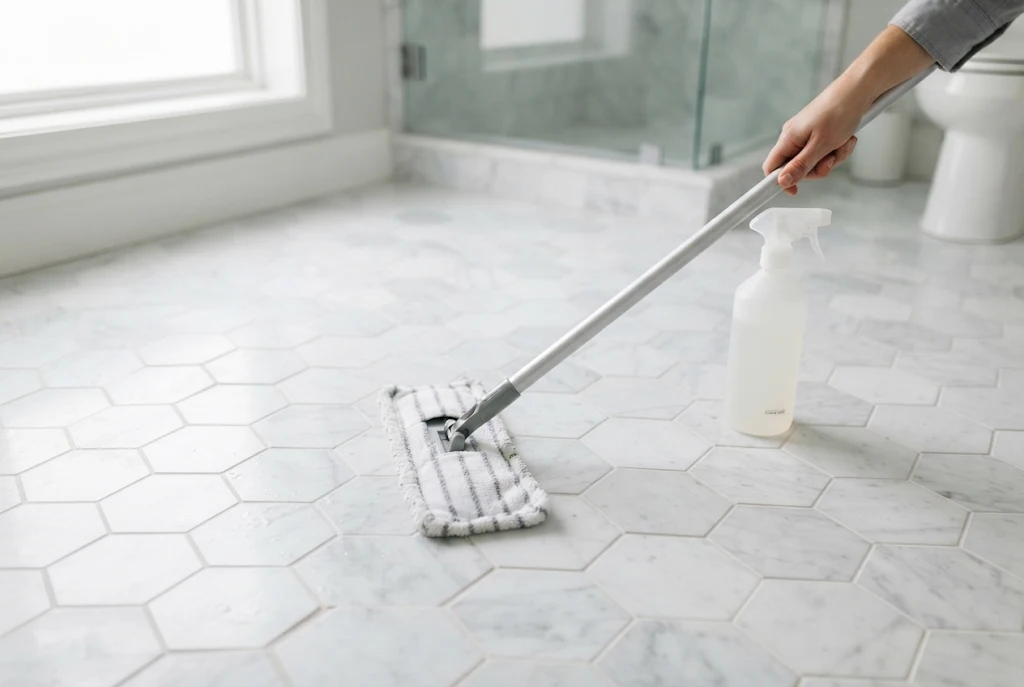
A Carrara mosaic hexagon floor looks lovely when it’s new. Then one day you spot a dull, cloudy ring by the basin, where a splash of something acidic sat for too long. That mark isn’t dirt. It’s etching, and no amount of scrubbing will lift it.
The short answer is to sweep or vacuum grit away often and wash the floor with warm water and a pH-neutral stone cleaner (or a few drops of mild washing-up liquid). Rinse it and dry it off. Keep anything acidic away from the stone. That means vinegar, lemon, most limescale removers and many “bathroom” sprays. A small hex mosaic has hundreds of grout joints, so the grout is where most people get caught out. The rest of this guide covers that too.
Why Carrara Marble Etches So Easily
Carrara is a genuine marble, made mostly of calcite, which is a form of calcium carbonate. Acid reacts with calcium carbonate and dissolves a thin layer of the surface. What’s left is a patch that looks dull, slightly rough or “watermarked”, even when it’s spotless.
The Natural Stone Institute’s care guidance warns that products containing lemon, vinegar or other acids may dull or etch calcareous stone such as marble. It also points out that etch marks come from acid left on the surface. Some spills etch and stain at once, while others only etch.
Etch mark or stain? How to tell
Getting this right saves you from scrubbing at something that won’t budge.
| What you see | Likely cause | What helps |
|---|---|---|
| Dull, pale or cloudy patch, often ring-shaped | Etching (acid has eaten the surface) | Polishing or honing, not cleaning |
| Darker or coloured mark (brown, orange, yellow, grey) | A stain soaked into the stone | A poultice or a stone stain remover |
| Grey haze across the face of the tiles | Grout or soap residue | Neutral cleaner and a soft pad, or a stone-safe residue remover |
| Darkening around the edges of each hexagon | Grout pigment or water soaking in | Sealing, and drying the floor properly |
Polished Carrara shows etching more clearly, because the mark breaks up the shine. Honed (matt) Carrara still etches, but the damage tends to blend in better.
What You Actually Need
You don’t need a cupboard full of specialist products. A sensible kit looks like this:
- A soft-bristle brush or a vacuum with a hard-floor head (check the wheels aren’t worn or gritty)
- A flat microfibre mop, plus a separate clean microfibre cloth for drying
- Two buckets, one for the cleaning solution and one for rinse water
- A pH-neutral cleaner made for natural stone, or mild washing-up liquid
- A soft nylon grout brush (an old soft toothbrush works for small areas)
- A squeegee if the floor is in a shower
Leave out the vinegar, lemon, bicarbonate of soda pastes, cream cleansers, scouring powders and anything sold as a “limescale remover”. Cream cleansers and powders scratch. Limescale products are usually acid-based, which is exactly what marble can’t take.
Step-by-Step Routine Clean
This takes about ten minutes for a typical UK bathroom floor.
- Remove grit first. Sweep with a soft brush or vacuum. Sand and grit act like sandpaper underfoot and gradually dull the surface. On a mosaic, grit also lodges in the grout lines.
- Mix a weak solution. Follow the dilution on the stone cleaner’s label. If you’re using washing-up liquid, a few drops in a bucket of warm water is enough. More soap leaves a film, and a sticky film attracts dirt.
- Mop in small sections. Wring the mop until it’s damp rather than dripping. Puddles sitting on a small-format mosaic soak into the grout.
- Rinse. Go over the floor again with clean water, and change the rinse water once it looks cloudy.
- Dry it. Buff the floor with a dry microfibre cloth or mop. This step stops water marks, which are a real problem in hard-water areas across much of southern and eastern England.
How often? In a busy family bathroom, a quick sweep every day or two and a mop once a week usually keeps things in good shape. A guest cloakroom can go much longer between washes.
Cleaning the Grout on a Carrara Mosaic Hexagon Floor
This is the bit most guides skip. A 1-inch or 2-inch Carrara mosaic hexagon sheet has far more grout per square metre than large tiles do. The grout often looks dirty long before the marble does.
The problem is that many grout cleaners and “grout reviver” sprays sold in the UK are acidic or contain strong chemicals. You can’t apply them to the joints alone, because they’ll spread straight onto the marble.
A safer method for dirty grout
- Spray or brush the stone-safe neutral cleaner onto a small area.
- Leave it for a minute or two so it can loosen the grime.
- Scrub along the joints with a soft nylon brush. Use short strokes and let the brush do the work.
- Wipe up the dirty solution with a damp cloth and rinse. A small wet-and-dry vacuum is handy here because it pulls dirty water out of the joints instead of leaving it to dry back in.
- Dry the area.
If the grout is still badly discoloured after a few rounds, the stain may be in the grout itself rather than on it. A professional deep clean, or re-grouting that area, is often the honest fix. A stronger chemical risks the marble around it.
What about steam mops?
Steam mops are popular in the UK, but they aren’t a safe default for marble mosaics. Heat and pressure can push moisture into porous stone and grout, and some sealer manufacturers advise against them. Check the instructions from your tile supplier and your sealer before using one. If you’re not sure, stick to a damp mop.
Dealing With Spills Before They Etch
Speed matters more than technique. The common culprits on a bathroom or kitchen floor include:
- Toothpaste with whitening ingredients, mouthwash and some skincare products
- Perfume, aftershave and hairspray (alcohol and other ingredients can mark the surface)
- Fruit juice, wine, fizzy drinks and tomato-based sauces
- Toilet cleaner splashes, which are often strongly acidic
Blot spills with kitchen roll rather than wiping, because wiping spreads the liquid over more stone. Then rinse the spot with plain water and dry it. The UK’s National Federation of Terrazzo Marble & Mosaic Specialists gives the same advice: blot rather than rub, and test any cleaning product on a small, hidden area first.
Showers, Soap Scum and Limescale
A Carrara hex mosaic is a classic shower-tray floor, but it’s also the hardest place to keep marble etch-free. Soap scum and limescale build up, and the usual products for them are acidic.
A few habits help a lot:
- Squeegee after every shower. It’s dull, but it cuts soap scum and hard-water spotting more than anything else you can do.
- Switch to a pH-neutral shower gel and avoid oil-heavy bath products, which leave slippery residue on the floor.
- Use a non-acidic soap scum remover labelled as safe for natural stone. The Natural Stone Institute also mentions a weak ammonia solution for bath areas. It warns against using it often and against ever mixing ammonia with bleach, because the combination produces a toxic gas. Follow the product label and keep the room ventilated.
- Think about a water softener or shower filter if you live in a very hard-water area. It’s a bigger decision, but it attacks limescale at the source.
Sealing: What It Does and Doesn’t Do
Many people assume a sealed floor can’t etch. Unfortunately, that isn’t how it works.
Most stone sealers are impregnating sealers. They soak into the stone and slow down how fast liquids get absorbed, which helps against stains and protects the grout. They don’t form an acid-proof shield, so an acid spill left on a sealed floor can still etch it.
Sealing is still worth doing, especially on a mosaic floor with so much grout. Ask your tile supplier or the sealer manufacturer how often to reapply, because it depends on the product, the finish and how much traffic the floor gets. A simple check is to drip a little water onto the stone and the grout. If it darkens the surface within a few minutes instead of beading, the floor is probably due for another coat.
Already Got Etch Marks? Your Options
If the damage is done, here’s what to expect, in order of effort:
- Light etching on polished Carrara: a marble polishing powder or etch-remover product can sometimes restore the shine. Follow the instructions exactly and try it on a hidden tile first.
- Light etching on honed Carrara: these marks are often hard to spot once the floor is clean and dry. Many people decide to live with them.
- Widespread or deep etching: you need a professional stone restorer, who can hone and repolish or refinish the floor. The Natural Stone Institute also recommends a dealer or professional restorer for etched areas.
Don’t try to sand or “buff out” a mosaic with DIY abrasives. The small tiles and the grout between them are easy to damage unevenly.
A Simple Care Schedule
If you like a routine you can stick on the inside of a cupboard door, this one works for most homes. Adjust it for how busy the room is.
| How often | Task |
|---|---|
| Daily or every other day | Sweep or vacuum. Squeegee the shower floor after use. |
| Weekly | Damp mop with a pH-neutral cleaner, rinse and dry. |
| Monthly | Scrub the grout lines with a soft brush and neutral cleaner. Shake out or wash the mats. |
| Every few months | Do the water-drop test on the stone and grout. |
| When the test fails | Reseal, following the sealer manufacturer’s instructions. |
Keeping a note of when you last sealed the floor is worth the effort. It’s easy to forget, and it means you’re not guessing next time.
Common Mistakes That Cause Etching
- Using a multi-purpose bathroom spray “just this once”
- Cleaning with vinegar because a social media hack said it’s natural
- Using bleach-based or limescale products on the grout and letting them run onto the marble
- Leaving mats with rubber backing on a damp floor
- Letting the floor air-dry in a hard-water area
- Overdosing the cleaner and creating a sticky film
Your Carrara Floor, Kept Simple
A Carrara mosaic hexagon floor doesn’t need fussy care. It needs the right products and a couple of good habits. Keep grit off it, wash it with something pH-neutral, dry it afterwards, and treat anything acidic as the enemy. If you only change one thing this week, check the labels on every cleaner in your bathroom cupboard and move the acidic ones out of reach of the floor.
Frequently Asked Questions
Can I use washing-up liquid on a Carrara mosaic hexagon floor?
Yes, a few drops of mild washing-up liquid in warm water is fine for routine cleaning. Use it sparingly and rinse well, because too much soap leaves a dull film.
Is vinegar safe for Carrara marble if it’s diluted?
No. Even diluted vinegar is acidic and can etch marble. Use a pH-neutral stone cleaner instead.
Will sealing stop my Carrara floor from etching?
No. Sealer helps the stone and grout resist stains, but it doesn’t make the marble acid-proof. Spills still need blotting up quickly.
How do I remove limescale from a marble shower floor?
Avoid ordinary limescale removers, which are usually acidic. Use a non-acidic product labelled safe for natural stone, and squeegee after each shower to stop the build-up.
Can etching be removed?
Light etching on polished marble can sometimes be polished out. Deeper or widespread etching usually needs a professional stone restorer to hone and repolish the floor.