Most cats don’t scratch because they’re mean. They scratch because they’ve been grabbed, they can’t get away, and their front paws are free. If you take away those three things, pilling a cat stops being a fight.
The short answer: wrap your cat snugly in a towel so only the head sticks out, keep their back against your body so they can’t back up, tilt the head up until the nose points at the ceiling, and drop the tablet as far back on the tongue as you can. Close the mouth for a second, stroke the throat, then give a little water or a soft treat right away. Trimming the front claws a day before and asking your vet whether the tablet can go in food will remove most of the risk before you even start.
The rest of this guide covers how to give a cat a tablet safely, step by step, plus the small details that make the biggest difference.
Before You Start: Set Things Up So Claws Never Come Into Play
Most scratches happen in the first five seconds, while you’re still trying to get hold of the cat. Good preparation means you’re done before your cat has worked out what’s going on.
Ask Your Vet Two Quick Questions
Before you try any hands-on method, call the clinic and ask:
- Can this tablet be given with food or hidden in a treat? Some medications are fine with food, and some need an empty stomach. If food is allowed, you may not need to restrain your cat at all.
- Can it be crushed or split? Some tablets are coated or slow-release, and crushing them can change how they work. Never crush one unless your vet or pharmacist says it’s OK.
This one phone call is the best way to avoid scratches, because a cat who eats the tablet in a treat never gets wrapped up at all.
Trim the Front Claws a Day or Two Earlier
Clip the tips of the front claws a day or two before the first dose, not right before it. If you clip and pill in the same session, your cat links the towel and the handling with two unpleasant things at once. Just take off the sharp tips and stay well away from the pink quick.
Gather Everything First
Have all of this within reach before you pick up your cat:
- The tablet, out of its blister pack
- A large bath towel or a thin fleece blanket
- A small oral syringe with about 3 to 5 ml of water
- A soft, smelly treat or a lickable treat for afterward
- A pill popper (pet piller), if you’re using one
Hunting for the water syringe while holding a wriggling cat is how hands get raked.
Choose Where You’ll Do It
A kitchen counter or table at waist height works well for most people. You can also kneel on the floor with your cat sitting between your knees, facing away from you. Either way, the cat’s back end should rest against your body. A cat who can’t back up is far less likely to start scrambling.
Pick a quiet time, too. Don’t start right after a loud delivery, a dog barking, or kids running through the house.
How to Give a Cat a Tablet Using the Towel Wrap
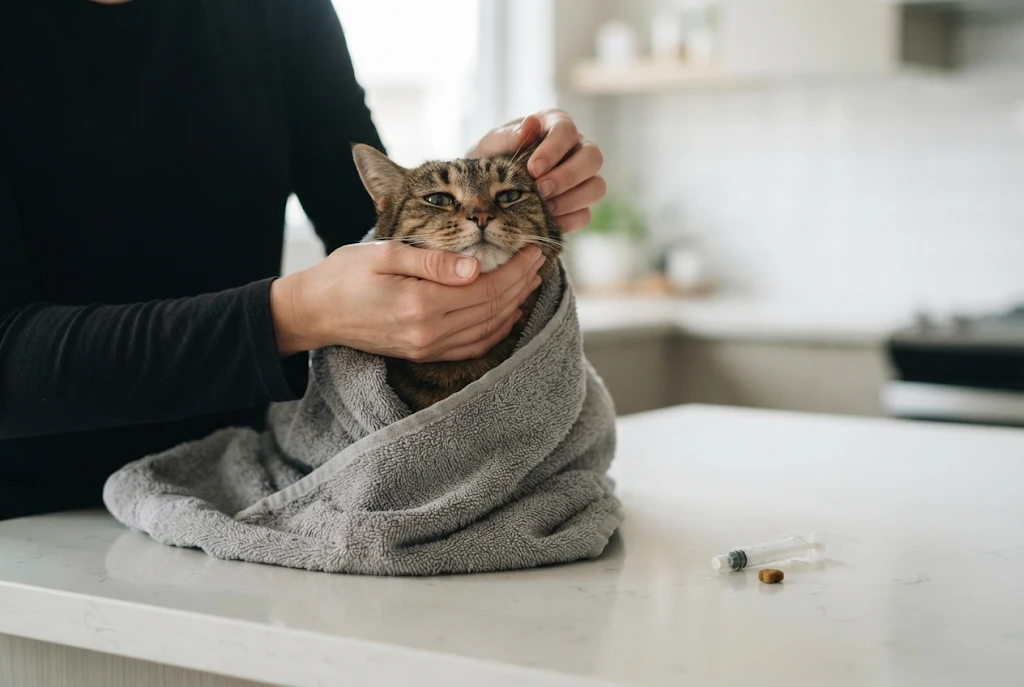
Vets often call this the “purrito.” It’s the most reliable way to keep all four paws out of the picture, and it works for cats who are nervous or have scratched before.
- Lay the towel flat and place your cat in the middle, facing away from you.
- Wrap one side of the towel snugly over the shoulders and under the chest, tucking it beneath the cat.
- Wrap the other side over the top so the front legs are tucked inside. The wrap should feel snug, like a firm hug, but not tight around the neck.
- Hold the cat against your body with your forearm resting along their back.
- Hold the tablet between the thumb and index finger of your dominant hand.
- With your other hand, cup the top of the head from above, with your thumb and fingers resting just behind the upper canine teeth. Gently tilt the head back until the nose points up. Most cats open their mouth a little as the head tips back.
- Use the middle finger of your tablet hand to press lightly on the small front teeth of the lower jaw and open the mouth further.
- Drop or push the tablet as far back over the tongue as possible, aiming for the center. If it lands on the front of the tongue, it’s coming back out.
- Close the mouth gently, lower the head to a normal angle, and stroke the throat or blow lightly on the nose. A lick of the lips usually means the cat has swallowed.
- Give 3 to 5 ml of water slowly into the side of the mouth with the syringe, or offer a treat straight away (more on why below).
- Unwrap your cat and offer praise or a favorite treat.
The whole thing should take less than 30 seconds once you’ve practiced. If your cat is calm, you can try it without the towel, but keep the towel nearby.
Hand Pilling vs. Pill Popper vs. Treats: Which Keeps Your Hands Safest?
Each method has its place. Here’s how they compare when your main goal is to avoid scratches and bites.
| Method | Risk of scratches | Risk of bites | Best for | Watch out for |
|---|---|---|---|---|
| Hidden in a treat or food | Very low | Very low | Food-motivated cats; tablets your vet says can go with food | Cats who eat around the pill or spit it out later |
| Pill popper (piller) | Low to medium | Low | Cats who bite; owners with larger hands | Pushing too far or too hard can hurt the throat |
| Fingers, with towel wrap | Low | Medium | Most cats, including anxious ones | Your fingers are close to the teeth |
| Fingers, no towel | Medium to high | Medium | Calm, easygoing cats | Front paws are free to swipe |
A pill popper keeps your fingers out of the mouth, which is a real advantage if your cat bites. Place the tip gently at the back of the tongue, not down the throat, and push the plunger smoothly. It’s worth practicing with a small treat in the popper first, so your cat gets used to the device.
For treat hiding, a useful trick is to give two or three plain treats first, then the one with the tablet, then another plain one. Your cat is busy eating and doesn’t stop to inspect each piece.
The Step Most People Skip: Water or a Treat Afterward
This step isn’t about scratches, but it is about your cat’s safety, and many guides skip over it.
A tablet given “dry” can stick in the esophagus, the tube that carries food to the stomach. A 2009 feline pilling study points out that earlier research found that tablets or capsules given without water stayed in the esophagus for 11 minutes in up to half of the cats tested. Pills that sit there can irritate the lining, and some medications, such as certain forms of the antibiotic doxycycline, have been linked to serious narrowing of the esophagus in cats.
The fix is simple:
- Follow every tablet with about 3 to 5 ml of water from a syringe, squirted slowly into the cheek pouch, not straight down the throat.
- Or offer a small amount of soft food or a lickable treat straight after.
It also helps your cat learn that the handling ends with something nice, which makes the next dose easier.
Learn Your Cat’s “Stop Now” Signals
You’ll get scratched less if you can tell when a cat is close to its limit. Pause if you see:
- Ears turned sideways or pressed flat
- A tail that’s lashing or thumping
- Very wide, dark pupils
- Growling, hissing, or a low yowl
- A stiff body that’s starting to twist
If you see these signs, put your cat down calmly and try again in 10 to 15 minutes, or later that day if the dosing schedule allows. Pushing on with a cat who is past its limit is how most serious scratches and bites happen, and each bad session makes the next one harder.
Check with your vet about how much leeway there is in timing. For many tablets, giving a dose an hour late is fine, but that varies by medication.
Common Mistakes That Lead to Scratches
These are the habits that turn a 30-second job into a struggle:
- Chasing the cat. If you corner them under the bed first, your cat starts the session already in fight-or-flight mode. Pick them up casually when they’re relaxed, as you would for a cuddle.
- Approaching from the front. Coming at a cat face-on, with your hand heading for its mouth, looks threatening. Approach from the side or from behind.
- Leaving the front paws free. If your cat swipes even once, use the towel every time.
- Being slow and hesitant. Moving calmly is good, but fiddling for a long time is worse for both of you. Plan the steps so you can move gently but without hesitating.
- Holding the head too tightly. Squeezing makes cats panic. Firm but light is the goal.
- Placing the pill too far forward. If it lands near the front of the tongue, your cat will spit it out and you’ll have to start again, now with a more upset cat.
- Making it the only time you handle the mouth. Gently touching your cat’s face and lips for a few seconds during calm moments, followed by a treat, makes pilling day less of a shock.
If You Do Get Scratched or Bitten
Even with care, it can happen. Wash scratches right away with soap and running water. Bites need extra attention. Cat teeth make deep, narrow punctures that can carry bacteria deep into the skin, and veterinarians at Texas A&M’s veterinary college warn that cat bites can be very serious and advise seeing a human health care provider if you’re bitten while medicating your cat.
Get medical advice promptly if a bite or scratch becomes red, swollen, warm, or painful, or if you feel unwell afterward. This article isn’t medical advice for people, so check with your own doctor about any wound you’re unsure of.
When to Stop Trying and Call Your Vet
Sometimes the safest choice for both of you is a different form of the medicine. Call your vet if:
- Your cat fights so hard you’re worried about injury to either of you
- You’ve missed doses because you couldn’t get the tablet in
- Your cat is drooling heavily, foaming, or hiding for hours after each dose
- Your cat stops eating or seems to have trouble swallowing
Ask your vet whether the medication is available as:
- A flavored liquid or chewable treat made by a compounding pharmacy
- A transdermal gel that’s rubbed on the inside of the ear (only some drugs work this way)
- A long-acting injection given at the clinic
- A smaller tablet or a different drug that does the same job
Not every medication comes in these forms, and compounded versions can cost more, so ask about both effectiveness and price. Many clinics will also have a vet nurse or technician demonstrate pilling with your own cat, which is often more useful than any written guide.
The Takeaway
Learning how to give a cat a tablet without getting scratched comes down to setting things up properly. Check first whether the tablet can go in food. Trim the claws ahead of time. Wrap your cat so the front paws are tucked away, and hold them against your body so they can’t back up. Place the tablet far back on the tongue, follow it with water or a treat, and end with praise. If none of that works, ask your vet about a liquid, a treat-based formula, or another form of the drug.
Frequently Asked Questions
What’s the fastest way to give a cat a tablet if I’m alone?
The towel wrap is the best option when there’s no one to help. With your cat wrapped and tucked against your body, both of your hands are free for the head and the tablet. A pill popper also makes it easier to do alone, because you only need one hand to place the tablet.
Why does my cat foam at the mouth after a tablet?
Many tablets taste bitter, and some cats drool or foam briefly if the tablet touches the tongue or gets bitten. It usually settles within a few minutes. If it doesn’t, or if it happens every time, ask your vet whether a coated or flavored version is available.
Is it OK to just put the tablet in my cat’s water bowl?
Generally, no. Your cat may not drink enough to get the full dose, the medicine may not dissolve properly, and it can put your cat off drinking. Only dissolve a tablet if your vet specifically tells you to.
How do I know my cat actually swallowed the tablet?
Look for a lick of the nose or lips after you close the mouth, and keep your cat in sight for a minute or two. Check the floor and their favorite hiding spots afterward. If you find a spat-out tablet, call your vet before giving another one, so you don’t accidentally give a double dose.