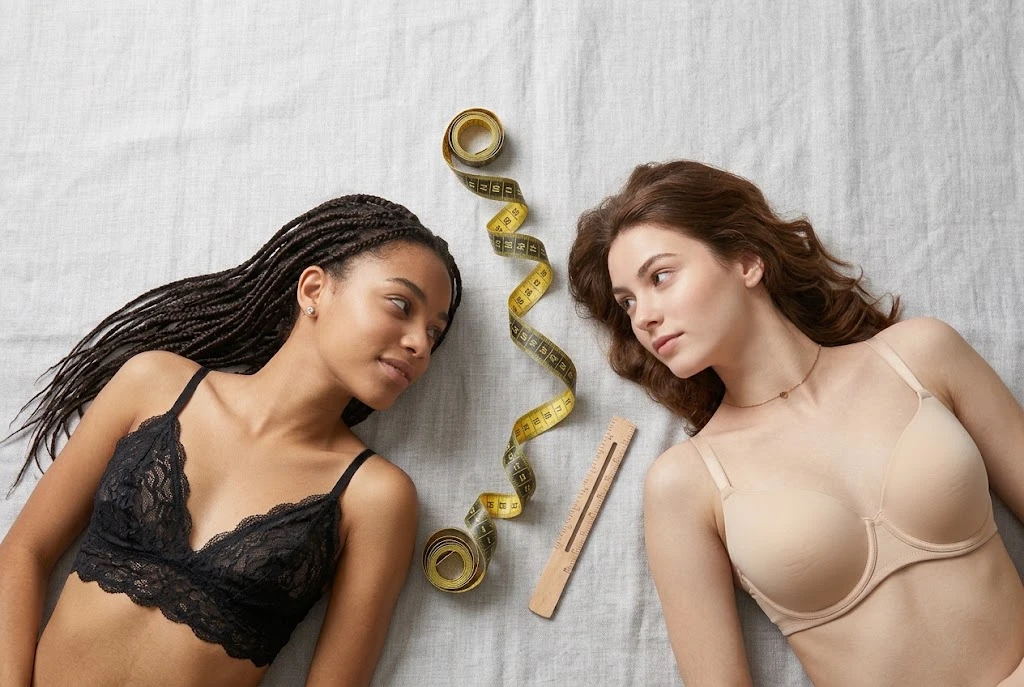
A bralette is a soft, lightly built bra, usually with no underwire and little or no padding. A traditional bra uses structure, such as an underwire, shaped cups, and a hook-and-eye band, to lift and shape. The short answer: choose a bralette when comfort and light support are enough, and choose a bra when you need lift, a smooth line under clothes, or a firmer hold.
There’s one catch, though. The line between the two has blurred. Some bralettes now come in band-and-cup sizes with real support, and plenty of wireless bras are nearly as soft as a bralette. So it helps to judge each piece by how it’s built, not just by what the tag calls it.
Bralette vs Bra at a Glance
| Feature | Bralette | Traditional bra |
|---|---|---|
| Underwire | Usually none | Common, though not universal |
| Padding | None or light | Ranges from light lining to molded cups |
| Support | Light to moderate | Moderate to firm |
| Shape | Follows your natural shape | Lifts, rounds, and separates |
| Sizing | Often XS to XL | Usually band and cup, like 34C |
| Closure | Often pull-on | Usually hooks at the back |
| Best for | Lounging, travel, casual days, layering | Work, fitted clothes, dressy outfits |
| Seen on purpose? | Often, as part of the outfit | Usually hidden |
How a Bralette and a Bra Are Built Differently
The gap between these two comes down to what’s doing the work. Fabric does most of it in a bralette, while a bra relies on a mix of parts working together.
Structure and materials
A traditional bra has more components: cups cut or molded to a shape, side wings, a center panel, and often a wire under each cup. That frame holds its form even before you put it on.
Lay a typical wire-free style on a table and it goes flat. It’s usually made from stretch cotton, modal, microfiber, or lace, so it takes its shape from your body instead.
Support and lift
In any bra, the band carries most of the weight, not the straps. Wire-free styles lean on that band even more because nothing else is propping things up from below.
That’s why a thin elastic strip on a lacy style feels so different from a wide band on a longline one. If you’re after more hold, look for these details:
- A wider band that stays level
- Double-layer or side-sling cups
- A firmer fabric with more stretch recovery
- Adjustable straps and a back closure
Sizing
This is where many people run into trouble. Bras are usually sold by band and cup, while many bralettes use letter sizes. A Medium has to cover several bust shapes at once, so it fits some bodies well and others only roughly.
Letter sizes also aren’t standard, so a Medium in one brand can fit like a Small or Large in another. Check each brand’s chart before you buy, and go by your underbust measurement if the chart lists it.
Shape under clothes
A molded bra gives a smooth, rounded outline. A bralette gives a softer, more natural shape, which can look great under a loose tee and less polished under a fitted knit.
Lace trim and seams can also show through thin fabric. If you’re wearing a slim T-shirt to the office, that detail matters more than most buying guides suggest.
The In-Between Option: Wireless Bras
Many comparisons skip this category, but it might be the one you actually want. A wireless bra has no wire, yet it keeps the shaped cups, closure, and sizing of a regular bra.
Think of it as the middle step. You get more shape and hold than a basic bralette, with less pressure than an underwire. If your bra feels like too much and your bralette feels like too little, try this before giving up on either.
When to Wear a Bralette
This softer option makes the most sense when your day asks little of it. Good situations include:
- Working from home. You get coverage without a wire pressing against your ribs for eight hours.
- Long flights and road trips. There are fewer hooks and less pressure while you’re sitting for hours.
- Lounging on weekends. Soft cotton works well for errands and a slow morning at home.
- Layering on purpose. Lace looks intentional under an open blazer, a loose button-down, or a sheer top.
- Low-back or wide-neck tops. Racerback and strappy styles can suit necklines where a standard bra would peek out.
One thing to avoid: treating it as workout gear. It isn’t built to limit movement, so reach for a sports bra for running, HIIT, or anything with jumping.
When a Bra Is the Better Choice
A structured bra earns its place when you want your clothes to sit a certain way. It’s usually the better pick for:
- Fitted dresses and tops. A molded cup holds a clean line under thin or clingy fabric.
- Workdays and formal events. It looks tidy under suiting, and you won’t think about it during a long day.
- Tailored clothes. Blazers and button-downs are often cut with a lifted bust line in mind.
- Days on your feet. A firm band and cups can feel better when you’re walking a lot or carrying things.
- Fuller busts that want lift. An underwire is still the simplest way to get strong lift and separation.
Comfort also isn’t the same as softness. A well-fitted underwire can feel better by evening than a stretched-out soft style that leaves you adjusting it all day.
Which One Suits Your Bust Size?
Smaller cups have the easiest time with this choice. With less weight to hold, nearly any style works, and many people in the A to C range wear them daily.
D cups and up can absolutely wear bralettes, but the style matters a lot. Skip thin triangle cups and letter-only sizing. Look for band-and-cup sizing, a wide band, and fuller coverage, then expect a softer shape than you’d get from a wire.
If your band sits comfortably but your cups overflow, the problem may be the size system and not the wire-free idea in general.
Match the Choice to Your Outfit
| What you’re wearing | Best pick | Why |
|---|---|---|
| Thin fitted T-shirt | Smooth bra or wireless bra | No lace texture showing through |
| Oversized sweater | Cotton bralette | Nothing needs shaping, so comfort wins |
| Sheer blouse | Lace bralette | It looks like a planned layer |
| Open blazer | Lace or longline bralette | Works as part of the look |
| Fitted office dress | Molded bra | Keeps a clean, smooth line |
| Racerback tank | Racerback bralette | The straps stay hidden |
| Wedding guest outfit | Bra suited to the neckline | Holds up through hours of wear |
Popular Bralette Options Worth Knowing
You’ve probably seen a few of these names while shopping. Here’s what sets each type apart so you can compare them fairly.
CK bralettes
CK bralettes from Calvin Klein are a go-to for simple, sporty basics. Many are pull-on styles with a logo band. For example, the unlined cotton-modal version sold at Urban Outfitters is described as light support with sizing from XS to XL.
They’re a good fit for lounging and casual layering. Treat them as comfort pieces and not as a replacement for a supportive bra.
Lace bralette styles
A lace bralette is usually the prettiest option and often the least supportive. Lace has limited structure, so these work best for smaller busts, layered looks, or evenings when you won’t be on the move for hours.
Watch for scratchy trim. Rub the lace against your inner arm, because that skin is sensitive enough to reveal irritation you might otherwise find out about halfway through the day.
ThirdLove bralettes
ThirdLove sells both lace and cotton bralettes, and its wireless line is worth a look if letter sizing has let you down. Its 24/7 Classic Wireless Bra sizing guide explains how the brand extends lettered sizes with + and ++ options for fuller cups, up to G.
That style is technically a wireless bra, but it shows how far wire-free sizing has come for readers who’ve been told wire-free styles aren’t for them.
Is a Bralette Better for Your Health?
You may have read that wire-free bras are healthier, or that underwires cause breast cancer. The evidence doesn’t back up that scare. A 2014 Fred Hutch study of postmenopausal women found no link between bra wearing and breast cancer risk, and that included underwire use and hours worn per day.
The National Breast Cancer Foundation also says no type of bra causes cancer, while noting that a poor fit can cause discomfort.
So the practical issue is fit. If you have ongoing breast, back, or shoulder pain, or marks that don’t fade, check with your doctor rather than assuming a new bra will solve it.
A Quick Fit Test Before You Keep Either One
Tags can be misleading, so try this at home with the tags still on:
- Check the band. It should sit level around your ribs, and you should fit about two fingers under it. A new band should feel snug because elastic loosens with wear.
- Raise both arms. If the band rides up, it’s probably too loose.
- Bend forward. Your bust should stay inside the cups, with no spilling out at the top or sides.
- Walk up a flight of stairs. If you feel you need to hold yourself in place, it’s too light for a day out.
- Put on your thinnest top. Look for seams, lace texture, or a double-bust line.
- Sit down for ten minutes. Waistbands and bands tend to dig in when you’re seated, not when you’re standing at a mirror.
How to Make Each One Last
Soft fabrics lose their stretch faster than people expect, and lace snags easily. A little care goes a long way for both types:
- Hand wash in cool water with a mild detergent when you can.
- If you use a machine, put the piece in a mesh bag and choose a delicate cycle.
- Skip the dryer, since heat can wear out elastic.
- Fasten hooks before washing so they don’t catch on lace.
- Rotate your pieces instead of wearing one for days in a row.
- Check the care label first, because some delicate lace has special instructions.
Replace a piece once the band stays loose on the tightest hook, or once a pull-on style no longer sits level. Worn elastic is usually why a once-comfy favorite starts to feel unsupportive.
So, Which Should You Choose?
You don’t have to pick a side. A mix works well for many wardrobes: a smooth bra for fitted clothes, a soft bralette for easy days, and maybe a wireless bra for everything in between.
If you’re buying just one thing this month, look at what you wear most. If that’s T-shirts and fitted tops, get a well-fitting bra or wireless style first. If it’s loose knits and days at home, a cotton bralette is probably the better spend.
Frequently Asked Questions
Can a bralette replace a bra?
Yes, on many days, particularly if you prefer light support or have a smaller bust. You may still want a structured bra for fitted outfits and formal occasions.
Do bralettes give enough support for large busts?
Some do. Look for band-and-cup sizing, a wide band, and fuller cups. Thin lace styles usually won’t offer enough hold, and you should still expect less lift than an underwire gives.
Can you wear a bralette as a top?
Yes. Styles made to be seen, such as longline or lace designs, work well with high-waisted pants or under an open blazer. Save that look for casual settings or evenings out unless your workplace is relaxed about dress codes.
Should a bralette feel tight?
It should feel snug, not tight. You should be able to slide about two fingers under the band, with no digging or marks that stay after you take it off.
Is it OK to sleep in a bralette?
Many people find a soft, loose one comfortable for sleep. It comes down to personal preference, so skip anything tight or with scratchy trim.