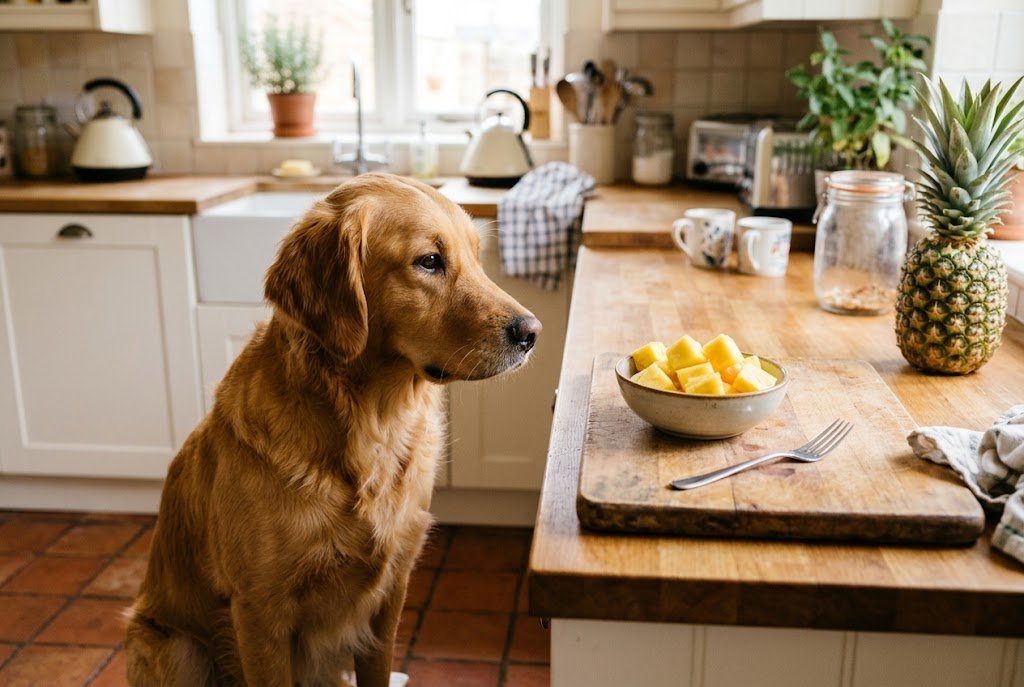
Your dog has seen you slicing a pineapple and is now sitting at your feet, very politely, staring. So, can dogs eat pineapple? Yes, they can. Fresh, ripe flesh isn’t toxic to them, and most healthy adult dogs can enjoy a few small pieces as an occasional treat.
There are three catches. The skin, core and crown need to stay well away from your dog, tinned fruit in syrup is best skipped, and the portion should be smaller than you might expect. Pineapple is a sugary fruit, and a dog’s stomach can object if you get carried away.
Below you’ll find how much is sensible for your dog’s size, what to do if the core goes missing, and whether pineapple really stops dogs eating poo.
Can dogs eat pineapple in every form?
Not all pineapple is equal. Here’s how the common forms compare:
| Type of pineapple | OK for dogs? | Why |
|---|---|---|
| Fresh flesh | Yes, in small amounts | Soft, watery and free from added ingredients |
| Frozen fresh flesh | Yes, with care | Plain fruit, but hard chunks can be tough on teeth, so let them soften a little |
| Tinned in syrup | No | Far too much added sugar |
| Tinned in juice | Best avoided | Sweeter and more concentrated than fresh fruit |
| Dried | Best avoided | The sugar is concentrated, and shop-bought versions may have extras added |
| Juice | Best avoided | Sugary and acidic, with little of the fibre found in whole fruit |
| Skin, core and crown | Never | Choking and blockage risks |
Advice does vary a little on juice and home-dried pineapple. Some vet-reviewed guides allow a very small amount, while others say to avoid them altogether. Since your dog gains nothing from either, the simple choice is to stick with fresh fruit.
How much pineapple can dogs eat?
Most articles stop at “in moderation”, which isn’t much help when you’re holding a knife and a hopeful Labrador is watching. A better starting point is the widely used 10% rule. The World Small Animal Veterinary Association says treats should stay within 10% of a dog’s daily calories, and that covers all treats combined, not just fruit.
Raw pineapple has around 50 calories per 100g, so a small cube of about 2cm comes to roughly 4 calories. The table below uses WSAVA’s treat allowances for healthy adult dogs. The last column is a cautious everyday suggestion from us, rather than a veterinary limit.
| Dog’s weight | Example breed | Daily allowance for all treats | Sensible pineapple portion |
|---|---|---|---|
| 4kg | Yorkshire terrier | 24 calories | 1 small cube |
| 10kg | Beagle | 47 calories | 2 small cubes |
| 20kg | Border collie | 79 calories | 3 small cubes |
| 30kg | Labrador | 108 calories | 4 small cubes |
You could technically fit a lot more pineapple into those allowances, but calories aren’t the only concern. There’s roughly 10g of natural sugar in every 100g of fruit, and a large serving is more likely to bring on an upset stomach. If your dog also gets training treats and a dental chew each day, there’s less room for extras.
Twice or three times a week is plenty. Breed sizes vary, so go by your own dog’s weight and body condition, and ask your vet if you’re unsure.
How to prepare pineapple for your dog
Preparing it takes a couple of minutes, and it’s where most problems can be avoided.
- Choose a ripe pineapple. It should smell sweet at the base and give slightly when pressed.
- Slice off the crown and base, then cut away all the tough skin, including the brown “eyes”.
- Remove the hard centre core.
- Cut the flesh into small cubes suited to your dog’s size. For fast eaters and tiny breeds, go smaller.
- Offer one piece and wait 24 hours before giving more, especially if it’s your dog’s first taste.
Once you’ve finished, put the skin and core straight into an outdoor bin or a kitchen bin with a secure lid. Sweet-smelling scraps are a real temptation, and a raided bin is a far more likely danger than the fruit itself.
Easy ways to serve it
- Plain: A small cube as a reward works perfectly well.
- Frozen on a warm day: Give it a few minutes out of the freezer before serving.
- On a lick mat: Mash a small amount and spread it thinly. Freezing the mat makes it last longer.
- As a food topper: Stir a little into your dog’s usual meal, counting it towards the daily treat allowance.
Does pineapple have any benefits for dogs?
Pineapple offers some useful nutrients, but it’s best seen as a tasty extra rather than a health food. A dog on a complete, balanced diet is already getting what it needs from its main meals.
Here’s what’s actually in the fruit:
- Water: It’s about 86% water, so it’s refreshing on a warm day.
- Vitamin C: There’s plenty of it, although healthy dogs make their own, so they don’t rely on food for it.
- Manganese and other nutrients: Small amounts of these are present, but the portion you’d give a dog is tiny.
- Fibre: It has a little, though not enough to count on.
- Bromelain: This is a group of protein-digesting enzymes, and it’s the ingredient behind most of the health claims online.
You’ll often read that bromelain helps dogs with digestion or joint inflammation. Research in dogs is limited, and a small cube of fruit is a very different thing from a measured supplement. Treat those claims with caution, and don’t use pineapple in place of treatment for a joint or digestive problem.
The most honest benefit is a simple one: a few cubes of fresh fruit can be a lower-calorie option than many fatty table scraps, especially for a dog who loves food.
Is pineapple bad for dogs? The real risks
The flesh isn’t poisonous, but that doesn’t mean it suits every dog or every situation. These are the main risks to keep in mind.
The skin, core and crown
This is the biggest concern. The core is dense and fibrous, while the skin and crown are tough and spiky. Dogs tend to gulp things down, and a swallowed chunk can cause choking or get stuck in the gut. Larger pieces and small dogs are the worst combination.
Too much sugar
Eating too much can cause vomiting, diarrhoea or a gurgling, unsettled stomach. Regular large portions can also add to weight gain and don’t do teeth any favours.
Dogs who may need to skip it
Check with your vet before offering pineapple if your dog:
- Has diabetes
- Is overweight or on a weight-loss plan
- Has a sensitive stomach or a long-term digestive condition
- Eats a prescription diet
- Has a history of food sensitivities
Puppies and senior dogs
Puppies can usually try a tiny piece once they’re settled on solid food, but their stomachs are sensitive, and they need the nutrition from their complete puppy food. One small sliver is plenty. For older dogs, keep the pieces soft and small, particularly if they have dental problems.
Pineapple in human food
The biggest risks often come from what the fruit is served with. These are the everyday examples worth watching:
- Cheese and pineapple sticks: A party favourite in Britain, and the cocktail stick is the real danger if a dog swallows it.
- Pizza: Onion, garlic, salty toppings and rich cheese are all poor choices for dogs.
- Cake and pudding: They’re high in sugar and fat. The FDA also lists baked goods among the products that may contain xylitol, a sweetener that’s highly toxic to dogs.
- Fruit salad: Check for grapes, which are toxic to dogs.
- Yoghurt pots and smoothies: Check the label for xylitol, particularly on anything sold as sugar-free or low sugar.
What to do if your dog eats pineapple core or skin
Don’t panic, and don’t try to make your dog vomit. Work through these steps:
- Take away any remaining pieces, and check your dog can breathe normally.
- Work out roughly how much was eaten and how big the pieces were.
- Call your vet for advice, even if your dog seems fine. If it’s late at night, use their out-of-hours service.
- Watch closely for the next couple of days, or for as long as your vet advises.
Contact a vet urgently if you notice repeated vomiting, a sudden loss of appetite, a sore or swollen tummy, straining, no poo at all, or unusual tiredness. These can be signs of a blockage. If your dog is coughing, gagging, pawing at the mouth or struggling to breathe, treat it as an emergency.
If your dog ate a lot of ordinary flesh, such as a bowl left on the coffee table, the likely result is an upset stomach. Offer fresh water, hold back on treats and call your vet if vomiting or diarrhoea continues, or if your dog seems unwell.
Can dogs eat pineapple to stop eating poo?
This is a popular home remedy. The theory is that pineapple makes poo taste unpleasant, so your dog loses interest. It may sound neat, but the evidence isn’t there. PDSA, the UK veterinary charity, says there’s no evidence this works, though it adds there’s no harm in trying if you introduce it slowly.
The bigger point is that eating poo is usually about behaviour. Habit, hunger, boredom, stress and attention-seeking are all common reasons, and a medical cause is much rarer. These steps are likely to help more than fruit:
- Go outside with your dog at toilet time and clear up straight away.
- Call your dog away as they approach poo, then reward them with something tasty.
- Stay calm, as shouting can confuse dogs or turn it into an attention-getting game.
- Put the cat’s litter tray where your dog can’t reach it.
If the habit starts suddenly, or comes with weight loss, diarrhoea, vomiting or a change in your dog’s coat, book a vet check.
Other fruits to try instead
If your dog isn’t keen on pineapple’s sharp taste, there’s no need to push it. Plenty of dogs would rather have something else, and many other fruits and vegetables make good low-calorie snacks.
| Treat | How to serve it | Take care with |
|---|---|---|
| Apple | Small slices | Remove the core and pips |
| Banana | A thin slice | It’s higher in sugar, so keep it small |
| Blueberries | Whole for most dogs | Cut for tiny dogs if needed |
| Strawberries | Sliced, without tops | Plain fresh fruit only |
| Watermelon | Small cubes | Remove the rind and seeds |
| Carrot | Sticks or grated | Cut to a safe size |
Never give grapes, raisins, sultanas or currants. They’re toxic to dogs, and that includes small amounts hidden in fruit cake, malt loaf and hot cross buns.
Final thoughts
So, can dogs eat pineapple? Yes, as long as it’s fresh, peeled, cored and cut small. Keep it to an occasional treat within your dog’s 10% allowance, and bin the scraps where your dog can’t get at them.
If your dog has a health condition, or you’re simply unsure, a quick word with your vet will give you an answer based on your own dog.
Frequently asked questions
Can dogs eat tinned pineapple?
It’s best not to. Syrup adds a lot of sugar, and even fruit tinned in juice is sweeter than fresh. A small piece isn’t poisonous, but fresh pineapple is the better option.
Can puppies eat pineapple?
Yes, in very small amounts once they’ve settled on solid food. Offer one tiny, soft piece and watch for any tummy upset. Complete puppy food should still provide their nutrition.
Can dogs eat pineapple every day?
It’s better not to make it a daily habit. Two or three small servings a week leaves more room for balanced food and reduces the chance of an upset stomach.
Is pineapple toxic to dogs?
No, the flesh isn’t toxic. The skin, core and crown are dangerous because of choking and blockage risks, rather than poison.
What happens if my dog eats too much pineapple?
The usual result is vomiting, diarrhoea or a sore tummy. Call your vet if symptoms continue, your dog seems unwell, or they may have swallowed the core or skin.