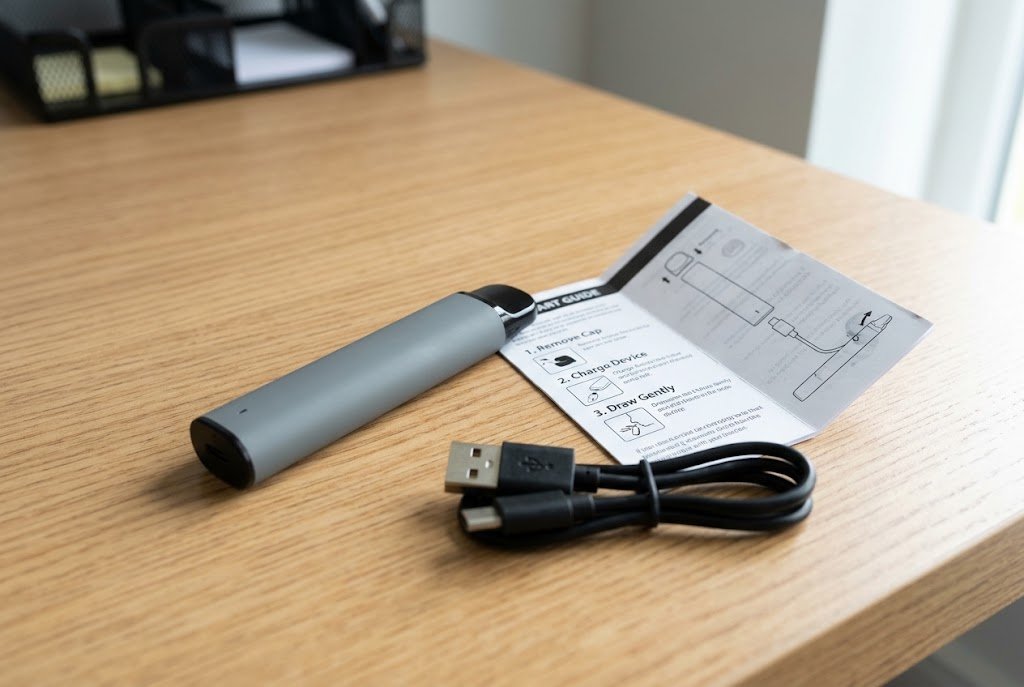
To use a fogger vape, take it out of the packaging, remove any seal or plug, check that it has charge, and inhale gently through the mouthpiece. Most models fire automatically when you draw, so there’s usually no button to hold. Start with short, light puffs, stop if you feel dizzy or sick, and charge it only with the method the maker specifies.
That’s the short version. The rest of this guide covers setup, screens and power modes, charging, common mistakes, and what to do when something goes wrong.
One thing up front: this guide is for adults who already vape. If you don’t use nicotine, there’s no reason to start. Federal law in the US sets the minimum sale age at 21.
What People Mean by “Fogger Vape”
“Fogger vape” is usually a misspelling of Foger, a vape brand known for high-puff disposables and pod devices such as the Bit 35K and Switch Pro 30K. Some people also use the phrase loosely for any device that makes big clouds.
The steps below work for most devices of this type, but controls differ between models. If the leaflet in your box disagrees with anything here, follow the leaflet.
It also helps to know how a fogger vape works. A battery heats a small coil, the coil turns e-liquid into aerosol, and you inhale that aerosol. Most sensors detect your draw, which is why the device fires without a button.
Know Which Type of Fogger Vape You Have
| Device type | How it’s set up | When it’s finished |
|---|---|---|
| Draw-activated disposable | Ready out of the box, single sealed unit | The whole device is retired |
| Disposable with screen and modes | Single sealed unit, with a display and a mode switch or button | The whole device is retired |
| Pod-based kit | A pod attaches to a rechargeable battery section | The pod is replaced and the battery stays |
Figures such as 18 mL of liquid or 50 mg of nicotine vary by model. Vape retailers list some Foger devices at 5% nicotine (50 mg/mL), which is a high strength, so check your own box.
How to Use a Fogger Vape, Step by Step
1. Check the Box Before You Open It
Look for a sealed package, a clear nicotine strength, and a batch or lot code. Scratched packaging, misspelled text, or a missing warning can point to a counterfeit. Fakes are a real problem in this market, and you can’t know what’s in one.
Read the leaflet too. It takes two minutes and tells you exactly what your model’s button or switch does.
2. Remove the Seals
Many devices ship with a silicone plug in the mouthpiece, a sticker over the airflow holes, or both. Leaving one in place is the most common reason a new device seems dead right out of the box.
With a pod kit, also remove any tab on the pod, then press it into the battery section until it clicks or sits flush.
3. Check the Battery
Take a light draw. If the device has a screen, it should wake up and show the battery level. If nothing happens, charge it briefly before assuming it’s faulty. Devices can sit in storage for a long time and arrive low.
4. Take a Slow, Gentle Puff
Put the mouthpiece between your lips and inhale slowly for about two to three seconds. Then pause. Hard pulling doesn’t help and can draw liquid into the mouthpiece.
Many vapers use one of two styles:
- Mouth-to-lung: draw into your mouth first, then breathe in. This feels closer to smoking a cigarette.
- Direct-to-lung: breathe straight into your lungs. This gives more vapor and a stronger hit, so it’s easy to overdo at high nicotine strengths.
If you’re new to a strong device, take one or two puffs and wait a few minutes. Nicotine doesn’t hit everyone the same way, and a device with thousands of puffs gives you no natural stopping point.
5. Choose a Power Mode, If There Is One
Some models offer a standard setting and a stronger one, often called Norm and Boost. Standard mode runs cooler and is the sensible place to start. The stronger mode makes denser vapor, but it uses liquid and battery faster, and it cuts the advertised puff count.
The way you switch modes varies, so use the leaflet instead of guessing at button presses.
6. Store It Properly Between Uses
Keep it out of hot cars and direct sun, away from coins and keys, and out of reach of children and pets. That last point matters more than most people think. The CDC reports that over 80% of US poison control calls about e-cigarettes involve children under 5.
What the Screen and Warning Lights Usually Mean
Exact icons and blink patterns vary, so treat this as a rough guide.
| What you see | Likely meaning | What to try |
|---|---|---|
| Battery icon low or blinking | Needs charging | Charge it and try again |
| E-liquid gauge near empty | Nearly out of liquid | Plan to replace it; don’t push it to burnt |
| Light on during charging | Charging in progress | Leave it until full, then unplug |
| No response at all | Dead battery, a seal left in place, or a locked device | Check the seals, charge, and read the leaflet |
| Vapor stops but battery is fine | Blocked airflow or a flooded sensor | See the troubleshooting section |
How to Charge a Fogger Vape Safely
Most rechargeable models use a USB-C port. Battery safety is the part people skip, and it’s where the worst accidents happen.
The FDA’s advice on vape battery safety comes down to a few habits:
- Don’t charge your vape with a phone or tablet charger.
- Don’t leave it charging overnight.
- Charge on a clean, flat surface where you can see it, away from anything flammable. Couches and pillows are out.
- Keep it away from extreme heat and cold, and don’t charge it in those conditions.
- Don’t use it near flammable gases or liquids such as oxygen, propane, or gasoline.
The phone charger point surprises people, because the port looks identical. Check what your device’s maker recommends, and use that. A sensible habit is to plug it in while you’re at your desk or in the kitchen, then unplug it when it’s full.
Stop using the device if it gets hot, swells, leaks, smells odd, or has been soaked. A damaged lithium battery can catch fire, so don’t throw it in a kitchen bin. See the disposal section below.
Common Fogger Vape Mistakes New Users Make
- Chain vaping. Puffing constantly heats the coil and can leave a burnt taste. It also means taking in nicotine faster than you realize.
- Trusting the puff count. Figures like 35,000 are best-case manufacturer claims, usually quoted for the standard mode. Long draws and high power will use it up much sooner.
- Vaping past empty. A burnt taste near the end usually means the wick is running dry. A disposable can’t be refilled, so that’s your cue to retire it.
- Modifying the device. Opening a disposable, refilling it, or changing the battery is a safety risk. FDA asks people to mention any modification when they report a fire or explosion, which tells you how much it matters.
- Leaving it in a car. A summer dashboard is hard on lithium batteries, and heat can cause leaks.
- Treating it as smaller than a cigarette habit. One high-strength device can hold a lot of nicotine. If you’re coming from low-strength pods, the jump can be bigger than you expect.
Quick Fixes When a Fogger Vape Stops Working
It Won’t Fire
Check that no plug or sticker is still in place, then charge it for a short while. Next, look at the airflow holes for lint from a pocket or bag. If it has a lock feature, the leaflet will explain how to release it.
It Tastes Burnt
Stop and let it rest for several minutes. If you’ve been chain vaping, that may be all it needs. If the burnt taste continues, the wick is probably dry or the liquid is almost gone, and it’s time to replace the pod or device.
It’s Gurgling or Leaking
Wipe the mouthpiece with a dry tissue, and blow gently through it with the device away from your face. Avoid drawing hard to clear it. If liquid touches your skin, wash it off with soap and water, since nicotine can be absorbed through the skin. If it gets in your eyes or someone swallows it, call Poison Control at 1-800-222-1222 in the US, or emergency services if symptoms are serious.
It Won’t Charge
Check the port for debris and try a different cable of the recommended type. If the device stays dead or feels warm, stop trying. Forcing it isn’t worth the risk.
What You Should Know About Safety and Legal Status
It wouldn’t be honest to call this product risk-free, so here’s the plain version.
Health: The CDC says most e-cigarettes contain nicotine, which is highly addictive. The aerosol generally has fewer harmful chemicals than cigarette smoke, but it isn’t considered safe, and it can contain nicotine, heavy metals, ultrafine particles, and flavoring chemicals. Youth, young adults, and pregnant people shouldn’t use these products.
The CDC adds that vaping may help non-pregnant adults who smoke only if it fully replaces all smoked tobacco. Using both isn’t an effective way to protect your health. If you have a heart condition or lung disease, or you take regular medication, talk to your doctor about nicotine use.
Legal status: The FDA says only products on its authorized e-cigarette list may be lawfully sold in the US. As of the page’s August 2026 update, that list had 48 products from five companies, and Foger wasn’t among them. The list changes, and state rules add further limits, so check the current version.
That matters to you as a buyer too. An unauthorized product hasn’t passed FDA’s review, and a store selling it may stop carrying it with little warning.
Flying and Disposal
Air travel: TSA doesn’t allow vaping devices in checked bags. They have to stay in your carry-on or on your person. If your bag gets gate-checked, take the device out first. Your airline may add its own limits, and you shouldn’t use it on board.
Disposal: A finished fogger vape shouldn’t go out with the garbage. The EPA says e-cigarettes don’t belong in household trash or recycling. Compactors can damage the lithium battery, and the leftover nicotine is toxic. Take the device to a household hazardous waste collection site, which many towns and counties run free for residents. Your local solid waste agency can point you to the nearest one, and it’s worth calling ahead if the device is damaged.
The Takeaway
A fogger vape is simple to operate: take out the seals, draw gently, and stay in the lowest mode until you know how a device affects you. The habits that matter most are the boring ones. Charge it the right way, keep it from heat and children, and don’t bin it with the household trash.
If you’ve started thinking about cutting back, the free US quit line at 1-800-QUIT-NOW connects you with trained coaches, and Smokefree.gov has text and app-based support.
FAQ
How do you turn on a fogger vape?
Most models turn on when you inhale, so there’s nothing to press. Models with screens may have a button or switch, and some have a lock feature, so check the leaflet for yours.
How long does a fogger vape last?
It depends on how often and how hard you draw, plus the power mode. Advertised puff counts are best-case figures. User reports vary widely, so treat any figure as a rough guide.
Can you refill a disposable fogger vape?
No. Disposables are sealed and aren’t meant to be opened. Trying to refill one risks leaks, nicotine exposure, and battery damage.
Why does my fogger vape taste burnt?
Usually the wick is drying out, either because you’ve been puffing too quickly or the liquid is almost gone. Let it rest first. If the taste stays, replace it.
Is a fogger vape safe to use while it’s charging?
It’s better not to. Unplug it first, and keep charging as a separate, supervised job so you can watch for heat or swelling.