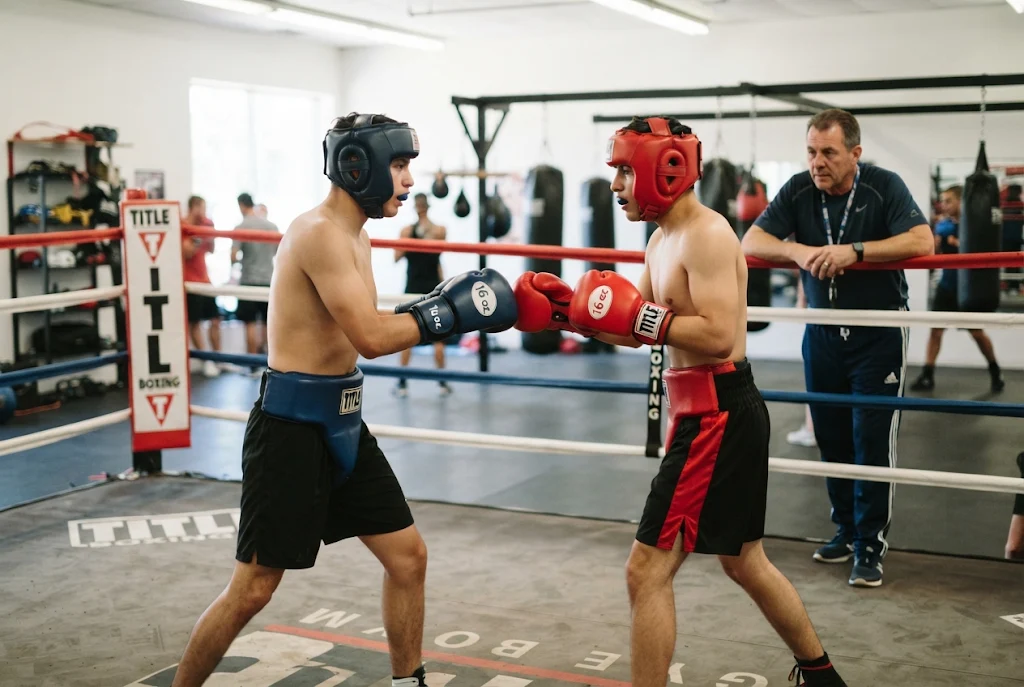
Your coach has just said you can join the sparring group next week. You feel excited, and probably a bit nervous too. That’s normal.
Quick answer: To prepare for your first sparring session, get your coach’s approval, learn a solid guard, jab and basic footwork, and bring a fitted mouthguard, hand wraps and gloves that weigh at least 14–16 oz. Agree on light contact with your partner before the first bell. The goal of the session is to learn. Nobody wins sparring. You’re there to try out your skills against a moving partner, at a speed you can control.
The rest of this guide covers what to expect, what to buy and what you can borrow, and the mistakes almost every newcomer makes. It also looks at what research says about head impacts, so you can decide how often and how hard you want to train.
What Sparring Actually Is (and What It Isn’t)
Sparring is controlled, mostly free practice with a partner. In boxing, kickboxing, Muay Thai or MMA you both throw real techniques. Each style has its own rules and customs to limit injuries. Wikipedia’s overview of sparring describes it as a training tool, separate from competitive fights, because the purpose is to learn rather than to win.
That difference matters more than anything else in this article. In a fight you want to hurt the other person. In a good sparring round you want to:
- see whether your guard stays up when someone throws back
- practise judging distance against a person who moves
- learn to stay calm while you’re under pressure
- get feedback from a coach who watches from outside the ring
When someone forgets this and starts swinging hard, both people stop learning.
Common types of sparring
Gyms use different names for these, but most beginners come across some version of the following:
| Format | What happens | Typical intensity |
|---|---|---|
| Technical / “touch” rounds | Light contact, focus on clean technique | Very low |
| Positional or restricted rounds | One partner only jabs, or one only defends | Low |
| Light rounds | Free exchanges at controlled speed and power | Low to medium |
| Hard rounds | Close to competition pace | High (not for beginners) |
Your first time should be one of the top three. If a gym puts you straight into hard rounds, that tells you something about the gym (more on that below).
How to Tell You’re Ready
There’s no fixed number of weeks. Schools handle this differently: some let students spar early on, others want a few months of basics first. A good coach decides based on your skills, not the calendar. These signs usually mean you’re close:
- Your guard stays up on its own. Ask a partner to tap at your head during pad work. If your hands come back up without you thinking about it, that’s a good sign.
- You can throw a jab and step back out of range. If you can attack and defend, you’ve got enough tools for a basic exchange.
- Your footwork holds together when you’re tired. In round three, do your feet still stay roughly shoulder-width apart?
- You can take a light hit without freezing or turning away. Partner drills with light contact will show you this.
- Your coach says yes. This one isn’t optional. Never arrange your first session on your own with a friend from the gym.
If you’re not sure, ask your coach directly: “What do you want to see from me before I spar?” Most coaches appreciate the question, and you’ll get a clear checklist.
The Gear You Need (and What You Can Borrow)
You don’t need a full kit on day one. The essentials protect your teeth, your hands and your partner.
| Item | Why it matters | Buy or borrow? |
|---|---|---|
| Mouthguard | Protects teeth and jaw; most gyms won’t let you spar without one | Buy your own (hygiene) |
| Hand wraps | Support wrists and knuckles | Buy (cheap, personal) |
| Gloves, 14–16 oz | More padding for both of you | Borrow at first, buy once you spar regularly |
| Headgear | Reduces cuts and swelling | Often available at the gym |
| Groin guard | Standard in kickboxing, Muay Thai and MMA | Buy your own |
| Shin guards | Needed wherever kicks are allowed | Borrow first, then buy |
German boxing retailers and club guides list headgear at roughly €40 to €150 and often say beginners can borrow it at first. Prices change, so check current offers before you buy.
A few gear details people overlook
- Fit the mouthguard properly. Boil-and-bite models only work if you mould them carefully at home, not five minutes before training. A poor fit makes breathing and talking harder, so you’ll be tempted to take it out.
- Glove weight is about your partner as well. Many gyms ask for 16 oz gloves for sparring, especially for heavier people. Bag gloves (10–12 oz) are usually not allowed. Ask your gym what it requires.
- Headgear doesn’t make you immune. It helps against cuts and some of the force, but it doesn’t stop your brain moving inside your skull. More on that in the safety section.
- Clean, short nails and no jewellery. It sounds basic, but scratches and torn earrings happen more often than you’d think.
The Week Before: A Simple Preparation Plan
You can’t cram a skill into a week, but you can arrive better prepared.
- Shadowbox with a purpose. Do three rounds a day of 2–3 minutes each. Focus on bringing your hands back to your face after every punch.
- Drill one defensive move. Pick one (parry, slip or catching with your glove) and practise it until it feels automatic. One reliable move beats five half-learned ones.
- Work on breathing. During bag rounds, breathe out sharply with each punch. Beginners who hold their breath are often exhausted within 90 seconds.
- Build some conditioning, but don’t overdo it. A couple of interval sessions is plenty. Don’t arrive with heavy, sore legs.
- Sleep well the night before. Being tired slows your reactions, and slow reactions mean you’ll get hit more.
- Write down two goals. For example: “keep my chin down” and “jab first”. Two clear goals are easier to hold on to under pressure than a long list.
What Happens at Your First Sparring Session
Before the first bell
Arrive early and warm up properly. Tell your coach this is your first time, even if they already know, because it reminds them to pair you sensibly. Ideally you’ll get a calm, experienced partner rather than another nervous beginner. Experienced partners usually control their power better, and many will tell you when you drop your hands.
Talk briefly with your partner before you start. Something like “First time for me, can we keep it light?” is enough. In most gyms, a tap of gloves at the start means “let’s work together”.
During the rounds
Beginner sparring rounds are usually short, often 2 minutes, with a break in between. A few things will probably happen:
- The first 30 seconds feel chaotic. This is the adrenaline. Breathe out, take a step back, reset your stance.
- You’ll forget combinations. That’s fine. Jab, move and keep your guard up. That’s already a good first round.
- You’ll get hit. Light, controlled contact is part of it. If a shot feels too hard, say so straight away or signal to the coach.
- You’ll get tired faster than on the bags. Being under pressure tires you out even when the pace is slow.
If you feel dizzy, get a headache, see blurred vision or feel “off” after a hit, stop. Don’t carry on to look tough.
After the session
Thank your partner. It’s basic courtesy, and it makes it more likely they’ll train with you again. Then ask your coach for one thing to work on. Write down your notes while you still remember the rounds. After a few sessions you’ll see the same habits coming up, and that’s where real progress starts.
Common First-Session Mistakes and Quick Fixes
| Mistake | What it looks like | Fix |
|---|---|---|
| Treating it as a fight | Throwing hard, trying to “win” | Agree on the intensity beforehand and match your partner |
| Freezing | Standing square, only covering up | Keep your feet moving and throw a jab to break the freeze |
| Dropping hands after punching | Getting countered every time | Shadowbox “punch and back to the face” |
| Holding breath | Tired after one minute | Breathe out with every punch |
| One punch at a time | Easy to read | Throw doubles, such as two jabs or jab-cross |
| Hiding injuries | Sparring with a sore wrist or a headache | Tell the coach and sit out the round |
Head Impacts: What the Research Shows
This section isn’t meant to scare you off. It’s here so you can make informed choices.
A University of Stirling study published in 2019 tested 20 amateur boxers before and after three 3-minute rounds. The Frontiers in Human Neuroscience paper found measurable short-term changes in brain function, motor control and memory one hour after sparring, with values back to baseline after 24 hours. The researchers called the changes acute and transient. They also said long-term effects from repeated routine head impacts still need more study.
A 2021 study in the Journal of Sports Sciences fitted 27 male university boxers with sensor-equipped headgear for two 2-minute rounds. On average, each boxer took around 28 impacts above the sensor threshold. The researchers found small declines in delayed memory, and the number of impacts and previous concussions predicted worse memory scores.
What this means for you in practice:
- Keep head contact light, especially early on. Many coaches limit hard rounds for exactly this reason.
- Don’t spar hard every session. Drills, pad work and technical rounds build skill with far fewer head impacts.
- Take symptoms seriously. Headaches, nausea or confusion after training are reasons to stop and see a doctor.
- Get checked if you have health concerns. If you have a history of concussion, heart problems or a long break from exercise, talk to a doctor before you start contact training. A sports medicine doctor (Sportmediziner) can give advice that fits your situation.
This article gives general information and isn’t medical advice.
Choosing the Right Place to Spar in Germany
In Germany, combat sports are often trained in two types of places: a traditional club (Verein) or a commercial gym. Both can be excellent. What matters more is how they handle beginners.
Good signs:
- A free or low-cost trial session (Probetraining) so you can watch sparring before you join
- Coaches who match partners by size and level
- Clear rules on intensity, often explained before rounds start
- Gear to borrow for newcomers
Red flags:
- Beginners put into hard rounds in their first weeks
- “Toughness” valued more than technique
- No coach watching during live rounds
- Pressure to keep going after a hard shot
If your goal is amateur competition later on, ask whether the club is a member of a regional association (Landesverband). Competition usually requires a licence and a medical check. The exact rules depend on the sport and the association, so check them directly.
Final Thoughts
Your first sparring session doesn’t need to go perfectly. It just needs to be safe and useful. Get your coach’s go-ahead, bring a fitted mouthguard and proper gloves, agree on light contact, and set yourself one or two simple goals. If you come out of it knowing what to work on next, it was a good session. Book your next technical round and build from there.
FAQ
How long should I train before my first sparring session? There’s no universal rule. Many gyms want a few weeks to a few months of basics first. Your coach’s judgement of your guard, footwork and control matters more than the time you’ve trained.
Do I need to buy headgear right away? Usually not. Many clubs lend headgear to newcomers. Buy your own mouthguard and hand wraps first, then decide on headgear once you spar regularly.
How hard should beginners hit? Lightly. Match your partner’s intensity, never go above it, and agree on the pace before the round starts.
Is it normal to feel exhausted after just one round? Yes. Nerves and tension use a lot of energy. Breathing out with each punch and keeping your shoulders relaxed will help over time.