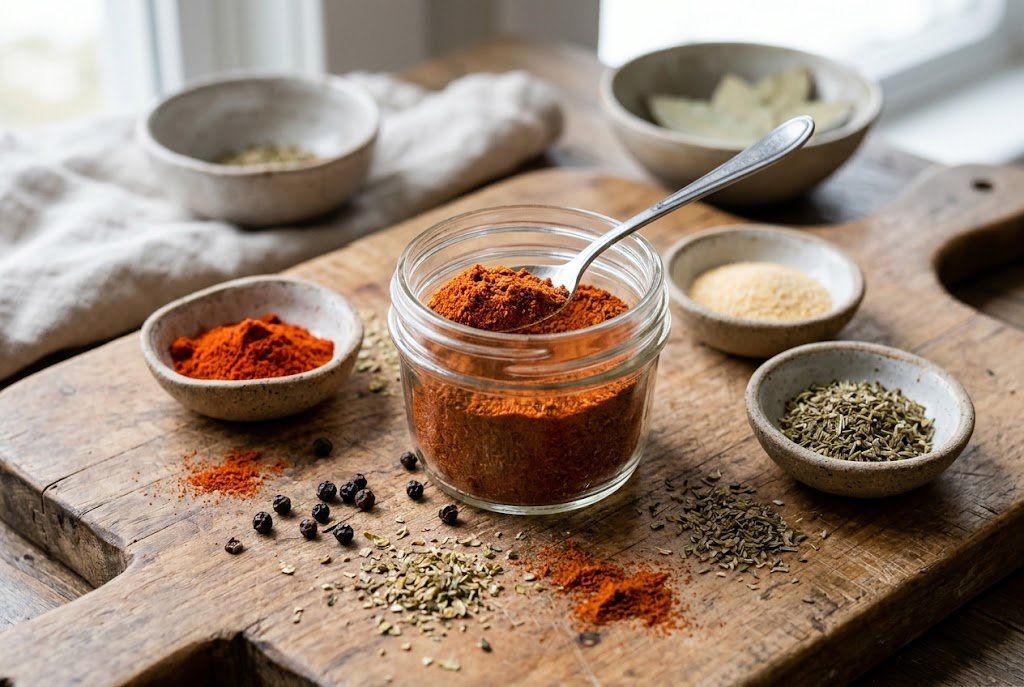
To make Cajun seasoning at home, stir together 2 tablespoons paprika, 1 tablespoon each of garlic powder and onion powder, 2 teaspoons fine salt, 1½ teaspoons black pepper, and 1 teaspoon each of white pepper, cayenne, dried oregano, and dried thyme. That’s it. Five minutes, one bowl, and you’ve got just under ½ cup.
The recipe is the easy part. What most people get wrong is the balance: too much salt, too much heat, or a blend that burns in the pan. Below you’ll find the full recipe, a simple way to set the heat, how much to use per pound of food, and a lower-salt version that still tastes like something.
The 5-Minute Cajun Seasoning Recipe
Makes: about 6½ tablespoons (roughly 50 g) Prep time: 5 minutes Heat level: medium Enough for: 6 to 7 pounds of meat or seafood
| Ingredient | US measure | Approx. weight | What it does |
|---|---|---|---|
| Paprika | 2 tbsp | 14 g | Color and mild, sweet base |
| Garlic powder | 1 tbsp | 9 g | Savory backbone |
| Onion powder | 1 tbsp | 7 g | Rounds out the garlic with a little sweetness |
| Fine salt | 2 tsp | 12 g | Makes the other flavors stand out |
| Black pepper | 1½ tsp | 3.5 g | Slow, woody warmth |
| White pepper | 1 tsp | 2.5 g | Sharp, earthy bite at the back of the throat |
| Cayenne | 1 tsp | 2 g | The main heat |
| Dried oregano | 1 tsp | 1 g | Herbal, slightly bitter lift |
| Dried thyme | 1 tsp | 1 g | Earthy, savory depth |
The weights are rounded, so treat them as a close guide. They’re handy if you’re in Australia, where a standard tablespoon holds 20 ml instead of the 15 ml used in the US and Canada. If you use Australian spoons, go by the grams or the blend will lean heavy on paprika and garlic.
How to Mix It
- Measure everything into a small bowl. Use level spoons, not heaped ones, especially for the salt and cayenne.
- Rub the oregano and thyme between your fingers as they go in. This breaks up large pieces and wakes up the aroma.
- Whisk for about 30 seconds until the color looks even, with no pale streaks of garlic or onion powder.
- Taste a tiny pinch. It should taste salty and warm, with heat that builds after a few seconds. A raw blend always tastes harsher than it will on cooked food, so don’t panic if it feels sharp.
- Pour it into a clean, dry jar and label it with the date.
If your garlic or onion powder has formed lumps, press it through a small strainer first. Lumps turn into bitter hot spots on food.
Choose Your Heat Level Before You Mix
Cayenne does most of the work here, so it’s the one measurement worth changing. The black and white pepper add warmth, but they won’t make anyone reach for water.
| Heat level | Cayenne | Good for |
|---|---|---|
| Mild | ½ tsp | Kids, fries, popcorn, eggs |
| Medium | 1 tsp | Chicken, shrimp, roasted vegetables |
| Hot | 2 tsp | Blackened fish, wings, seafood boils |
| Very hot | 1 tbsp | People who add hot sauce to everything |
Cayenne strength varies by brand and by how old the jar is. Start with the lower amount, cook something small, and add more later. You can stir extra cayenne into a finished blend, but you can’t take it back out.
Want a smoky version? Swap half of the paprika for smoked paprika. Using all smoked paprika can overpower delicate foods like shrimp, so half is a safer starting point.
What Makes It Cajun Seasoning
The flavors here trace back to southern Louisiana, where French-speaking Acadians settled after being deported from Canada in the 1700s. Their cooking grew from Louisiana’s Cajun food traditions, which lean on cayenne, black pepper, and salt, along with herbs like thyme and bay leaf.
There’s no single official formula for Cajun seasoning. Families and brands all do it differently, and many store-bought jars are heavy on salt. Paprika, garlic, and onion give this version a fuller flavor, so it works as an all-purpose rub rather than just a spicy salt.
People often ask how this differs from Creole seasoning. The two overlap a lot, but Creole blends usually lean more on herbs such as oregano, basil, and thyme, while Cajun blends lean more on pepper. Labels aren’t strict, though, so read the ingredient list instead of trusting the front of the jar.
How Much Cajun Seasoning to Use
Most recipes just say “season to taste,” which doesn’t help when you’ve got a pound of raw chicken in front of you. These amounts are good starting points for this particular Cajun seasoning:
| Food | Starting amount | Tip |
|---|---|---|
| Chicken | 1 tbsp per pound | Rub on 30 minutes ahead if you can |
| Shrimp | 2 tsp per pound | Toss right before cooking |
| Fish fillets | 2 tsp per pound | Pat dry first so it sticks |
| Steak or pork chops | 1 tbsp per pound | Press into the surface |
| Roasted vegetables | 2 tsp per pound | Toss with oil first |
| Fries or potato wedges | 1 to 2 tsp per pound | Season right after cooking |
| Rice or pasta | 1 tsp per cup, uncooked | Add it to the cooking liquid or sauce |
| Popcorn | ½ tsp per batch | Toss with melted butter so it clings |
Store-bought Cajun seasoning is usually much saltier, so these amounts don’t transfer directly. With a salty jar, start with about a quarter of the amount and build up.
How to Cook With It Without Burning It
Paprika and garlic powder both scorch quickly, and that’s why a homemade rub can taste bitter even when the recipe was fine. A few habits fix this.
- Keep the pan at medium to medium-high. That gives you a good crust without burnt spice.
- Mix the blend with oil before it hits the pan. Coating the food in oil first helps the spices stick and protects them from direct heat.
- Bloom it for soups and sauces. Stir the seasoning into hot oil or butter with your onions for 30 seconds, then add liquid. It tastes deeper than seasoning stirred in at the end.
- Season sauces in stages. Pasta sauces and gumbo reduce as they simmer, and the salt gets stronger as they do.
Blackening is the exception. It uses very high heat on purpose, and it creates a lot of smoke, so open a window or cook outside. If you plan to blacken fish often, leave out the salt and salt the fish separately. That gives you better control over the crust.
Lower-Sodium Version
This is one big reason to make your own Cajun seasoning. Two teaspoons of salt spread across the whole batch works out to roughly 240 mg of sodium per teaspoon of seasoning.
For comparison, one popular jar, Tony Chachere’s Original Creole Seasoning, is listed at 340 mg of sodium per ¼ teaspoon. That’s about 1,360 mg per teaspoon, so this homemade blend has far less. The FDA’s daily sodium limit is less than 2,300 mg for adults, which puts that difference in perspective.
To cut it further:
- Half the salt: Use 1 teaspoon for about 120 mg per teaspoon of blend.
- No salt: Leave it out, then salt each dish separately as you cook.
- Fill the gap: Add ½ teaspoon of extra smoked paprika or a pinch of dried lemon peel if the blend tastes flat.
These numbers are estimates based on table salt, and your salt brand may differ slightly. If you’ve been told to follow a sodium-restricted diet, your doctor or dietitian is the best person to set your limit. Salt substitutes containing potassium aren’t right for everyone, so check with them before using one.
Ingredient Swaps That Work
You don’t need a perfect spice rack to make Cajun seasoning. These substitutions keep the blend close to the original:
| Missing ingredient | Use instead |
|---|---|
| White pepper | Extra ½ tsp black pepper |
| Oregano | Same amount of marjoram |
| Thyme | Extra ½ tsp oregano |
| Onion powder | Extra ½ tbsp garlic powder |
| Cayenne | Finely ground red pepper flakes, same amount |
| Fine salt | Kosher salt, about 1½ times as much by volume, depending on brand |
Chili powder isn’t a clean swap for cayenne. In the US, it’s usually a blend that includes cumin and other spices, which shifts the flavor toward Tex-Mex.
As for dietary needs, single-ingredient spices are naturally gluten-free, but some brands process them on shared lines. If you need to avoid gluten strictly, look for a gluten-free label on each jar. This Cajun seasoning contains no dairy, sugar, or animal products.
How to Store Homemade Cajun Seasoning
Keep it in an airtight glass jar in a cool, dark cupboard, away from the stove. Heat, light, and steam are what wear it down. It’s dried spice, so it doesn’t spoil the way fresh food does. It just slowly loses aroma and heat.
For the best flavor, use it within 6 to 12 months. McCormick’s general guideline is 1 to 3 years for most seasoning blends, but homemade blends rely on your individual jars, and some may already be old. If the spices in your cupboard are near their dates, your blend won’t last as long. A quick smell tells you plenty: if it barely smells of anything, it’s time for a fresh batch.
Homemade Cajun seasoning clumps easily because it has no anti-caking agent. Salt, garlic powder, and onion powder all draw in moisture. A few tips help:
- Don’t shake the jar directly over a steaming pot.
- Scoop with a dry spoon, never a wet one.
- Add a few dry beans or grains of uncooked rice if you live somewhere humid.
- Shake the jar before each use, since finer powders settle toward the bottom.
Doubling the batch is simple, since every amount scales evenly. If you use it about once a week, a single batch should last a couple of months. It also makes a nice small gift in a labeled jar.
Easy Ways to Use Your Blend
Cajun seasoning goes well beyond gumbo and jambalaya. Some quick ideas:
- Stir ½ teaspoon into mayo for a fast fry dip or sandwich spread.
- Mix it into softened butter and melt it over corn on the cob.
- Add a pinch to scrambled eggs or potato salad.
- Use it in a simple dry rub for wings before baking or air frying.
- Season breadcrumbs or flour for fried fish or chicken.
- Toss it with chickpeas and oil, then roast until crisp.
The Bottom Line
Homemade Cajun seasoning takes five minutes, costs little if you already keep the basics, and gives you control over two things store-bought jars don’t: salt and heat. Mix the medium version first, cook a pound of chicken or shrimp with it, then adjust the cayenne and salt for the next batch. By the second jar, you’ll have your own house blend.
FAQ
Is Cajun seasoning very spicy?
It depends on the cayenne. This recipe is medium, with a noticeable kick that isn’t overwhelming. Use ½ teaspoon of cayenne for a mild blend suitable for most kids and spice-shy eaters.
What’s the difference between Cajun seasoning and Creole seasoning?
Both come from Louisiana and share many spices. Cajun blends tend to focus on peppers, while Creole blends usually use more herbs. Commercial labels vary, so check the ingredients.
Can I use Cajun seasoning instead of salt?
Yes, if it contains salt. Taste the dish before adding any more, because the blend is already seasoned. If you use a no-salt version, you’ll need to add salt separately.
How long does homemade Cajun seasoning last?
It stays at its best for 6 to 12 months in an airtight jar kept in a cool, dark place. After that it’s usually still safe, but the flavor fades.
Can I make it without paprika?
Yes, but the color and sweetness will change. Mild chili powder is the closest replacement, though it may add a light cumin flavor. Start with 1 tablespoon and taste.