Most scratches on a silver watch come from cleaning it, not from wearing it. A paper towel, a dab of toothpaste or a quick dip in jewelry cleaner can leave marks or dull spots on the watch.
The short answer: first work out what your watch is made of. Then wipe it with a dry microfiber cloth, clean the bracelet with lukewarm water, a drop of mild dish soap and a soft toothbrush, and dry it fully. Silver-tone steel never needs polishing paste, and a solid sterling case only needs a silver cloth when it has tarnished. Most of what you need is already in your kitchen.
The rest of this guide covers why the material matters, the steps for each type, and the mistakes that scratch watches most often.
First, Find Out What “Silver” Means on Your Watch
A watch in silver is usually not made of silver. Most silver-colored watches sold in the US are stainless steel, and some have a plated or coated finish on top. Solid sterling cases do exist, but you mostly find them on vintage pieces and some fashion or artisan brands.
This matters because each material reacts differently to cleaning. A method that’s perfectly safe on steel can strip plating or leave haze on a coated finish.
How to Check the Material
- Read the case back. Look for words such as “stainless steel,” “all stainless,” “925,” “sterling” or “base metal.”
- Look for a hallmark. On vintage cases, small stamped marks (for example “925” or a maker’s symbol) usually mean real silver.
- Check the product page or manual. The brand’s specifications list the case and bracelet materials.
- Notice how it ages. Steel doesn’t tarnish. If your watch has gone yellowish, brown or dark gray in the corners, it’s probably sterling or silver-plated.
Quick Comparison of Silver Finishes
| Finish type | Tarnishes? | Scratch risk when cleaning | Safe everyday method | Avoid |
|---|---|---|---|---|
| Silver-tone stainless steel | No | Low to medium (polished surfaces show swirl marks) | Soap, water, soft brush, microfiber | Abrasive pastes, steel wool, scouring pads |
| Sterling silver (925) | Yes | Medium (silver is softer than steel) | Dry microfiber, then a silver polishing cloth lightly | Liquid dips on the watch head, toothpaste, baking soda scrubs |
| Silver-plated base metal | Yes | High (plating is thin) | Dry or barely damp microfiber only | Any polish, dips, heavy rubbing |
| Coated or rhodium-finished | Rarely | Medium | Soap, water, microfiber | Polishing cloths with compound in them |
Why Silver Tarnishes and Steel Doesn’t
Tarnish is a chemical reaction, not dirt. The Canadian Conservation Institute explains that tarnish on silver is mainly silver sulfide, which forms when the metal reacts with sulfur gases in the air, mostly hydrogen sulfide. Sterling silver also contains copper, so its tarnish includes copper sulfide as well.
That’s why soap and water won’t lift tarnish from a sterling case. It’s also why removing tarnish always takes away a tiny amount of metal. Museum conservators keep polishing to a minimum for this reason, and the same rule protects your watch.
Stainless steel doesn’t tarnish the same way. When a steel watch looks dull, the cause is almost always a film of skin oil, sunscreen, soap residue or grime packed between the links.
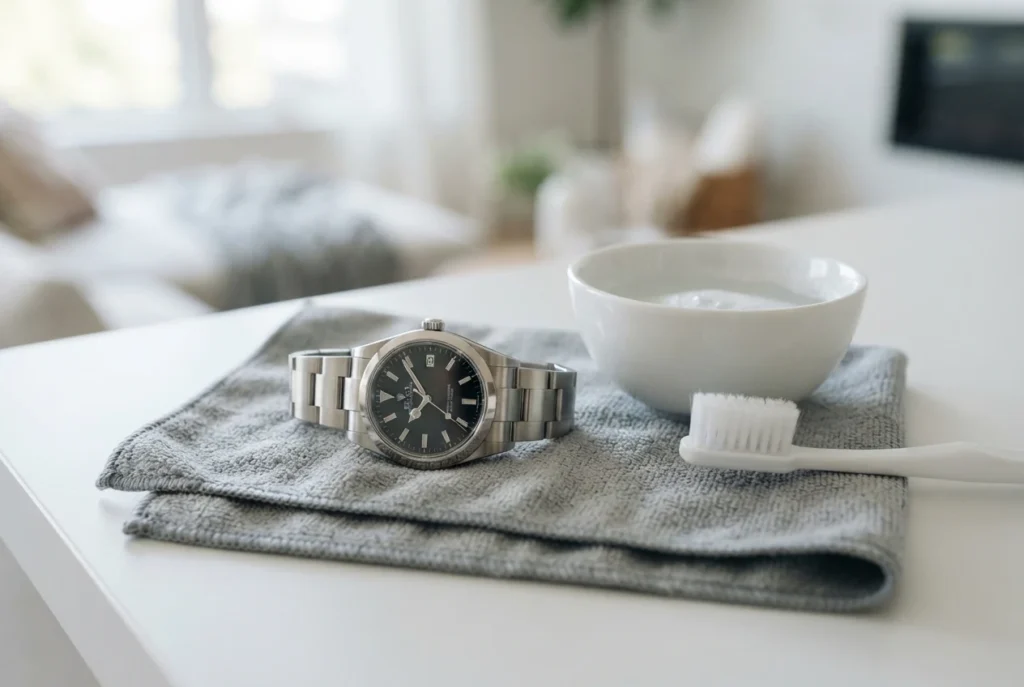
What You’ll Need
Keep it simple. Here’s the kit:
- Two clean microfiber cloths (one for washing, one for drying)
- A soft-bristle toothbrush, either new or set aside just for this
- A small bowl of lukewarm water
- One drop of mild, fragrance-free dish soap
- Cotton swabs or a wooden toothpick for gaps
- A silver polishing cloth (only for sterling cases)
- A towel to work on, so a dropped watch lands softly
Leave out paper towels, tissues, kitchen sponges, toothpaste, baking soda and magic erasers. Each one is abrasive or fibrous enough to leave fine marks, especially on polished surfaces and soft crystals.
Step-by-Step: Cleaning a Silver-Tone Stainless Steel Watch
This covers most silver watches, from everyday quartz models to steel dress watches.
1. Check the Water Resistance First
Look on the dial or case back for the rating. On Timex’s water resistance chart, a 30m rating covers only hand washing, and 50m adds light swimming. If your watch has no rating, or is rated 30m, don’t rinse it under the tap. Use a damp cloth on the case instead. Make sure the crown is pushed in, or screwed down if it’s a screw-down crown, before any water gets near it.
2. Do a Dry Wipe
Run a dry microfiber cloth over the crystal, case and bracelet. This lifts grit before you add water. If you scrub first, any dust on the surface acts like sandpaper.
3. Wash the Bracelet
Dip the toothbrush in soapy lukewarm water and shake off the excess. Brush between the links with light pressure. For a brushed finish (fine parallel lines), brush along the grain, not across it. Use a toothpick wrapped in a thin cloth for the clasp hinge and the gaps where the bracelet meets the case, because grime builds up most there.
4. Clean the Case and Crystal Gently
Wipe the case with a damp microfiber cloth. On the crystal, use straight strokes, not circles. If your crystal is acrylic (common on vintage and budget watches), it scratches much more easily than sapphire, so use the lightest touch you can.
5. Rinse Carefully (Only If It’s Rated for It)
If the rating allows it, rinse the bracelet quickly under cool or lukewarm running water. Avoid hot water. Heat and steam can stress the rubber gaskets that keep water out.
6. Dry Completely
Pat the watch dry with the second cloth, then leave it on a towel for a while, clasp open. Water left between the links is what leads to spotting and grime that comes back.
How often? Timex’s steel watch care guide suggests a deep clean about once a month if you wear the watch daily, plus a quick wipe of the case back and inside of the band now and then.
How to Clean a Sterling Silver Watch Case
A real sterling case needs a lighter, drier approach.
- Wipe off oils first with a dry microfiber cloth. Fingerprints speed up tarnish.
- Use a silver polishing cloth sparingly. Rub only the tarnished areas, using light back-and-forth strokes, not circles. Stop as soon as the shine comes back.
- Keep liquid silver dips away from the watch head. Dips are made for solid silver objects, not for things with movements, gaskets and dials inside. They can also strip the deliberate darkening that brings out engraved details.
- Clean the strap separately. If it’s a leather strap, take it off. Don’t soak it.
- Store it in a dry pouch or a small zip bag with an anti-tarnish strip. That keeps it away from air and humidity, which helps tarnish come back more slowly.
If the tarnish is heavy and black, or the watch is valuable or vintage, take it to a jeweler or watchmaker. They can take the case off the movement and clean it properly.
What About Silver-Plated Watches?
Plating is a very thin layer of silver over a cheaper base metal. Each time you polish it, you wear a little of that layer away. Once it’s gone, you see dull or coppery patches that look like stubborn tarnish but are really bare base metal.
For plated watches, stick to a dry or barely damp microfiber cloth. Skip polishing cloths, pastes and dips. If the plating has already worn through, cleaning won’t fix it. Replating is a job for a jeweler, and it may cost more than the watch is worth.
Cleaning the Band on a Watch in Silver
The strap often gets dirtier than the case, and each type needs its own care:
- Link bracelets: Use the brush-and-soap method above. Pay extra attention to the clasp, where sweat and soap collect.
- Mesh (Milanese) bracelets: The tight weave holds onto grime. Brush gently along the weave, rinse only if the watch is rated for it, then hold the band so water drips out and leave it to dry flat. A trapped drop can leave a water spot.
- Leather straps: Never soak them. Wipe with a barely damp cloth, let them air dry away from heat, and take them off before you wash the case.
- Rubber or silicone straps: Soap and water are fine. Rinse well, because soap left in the texture turns tacky.
If you can, take the strap off before cleaning. Most bands use spring bars that pop out with a cheap strap tool, so you can wash the bracelet and the case separately.
Common Mistakes That Scratch Silver Watches
These are the habits that do the most damage:
- Using toothpaste as polish. It’s made to be abrasive, so it can haze polished steel and soft silver.
- Wiping with paper towels or tissues. The fibers can leave fine hairline marks on polished surfaces.
- Rubbing in circles. Circular rubbing creates swirl marks that catch the light. Straight strokes hide wear better.
- Polishing a brushed finish. A polishing cloth can leave shiny streaks on a satin or brushed surface that are hard to undo.
- Putting the whole watch in an ultrasonic cleaner. Home ultrasonic units are fine for a removed metal bracelet, but they can force water past old gaskets into the case.
- Cleaning without checking the crown. A pulled-out crown is an open door for water.
When to Call a Professional
Some problems aren’t a cleaning job:
- Deep scratches or dings in the case or bracelet
- Fog or moisture under the crystal
- A watch that hasn’t had its gaskets checked in several years and that you plan to get wet
- Heavy tarnish on a vintage or high-value sterling case
- Worn-through plating
A watchmaker can refinish steel, replace gaskets and pressure-test water resistance. Prices vary a lot by shop and by watch, so ask for a quote before you agree to any refinishing.
Keeping It Clean Between Washes
A few small habits help a lot. Put your watch on after lotion, perfume and sunscreen have soaked in, not before. Give it a quick wipe with a dry microfiber cloth at the end of the day. Store it away from damp bathrooms. If you’ve worn it at the beach or the pool, rinse it with fresh water as soon as you can, as long as its rating allows it.
The Takeaway
Cleaning a watch in silver without scratching it comes down to two things: know what the “silver” actually is, and use the gentlest method that works. For steel, that’s soap, water, a soft brush and a proper dry. For sterling, it’s a dry wipe and a silver cloth used sparingly. For plated pieces, it’s a soft cloth and nothing more. Start with the case back check today and you’ll know which method is right for your watch.
FAQ
Can I use toothpaste to clean a silver watch?
It’s better not to. Toothpaste is abrasive, and it can leave a hazy finish on polished steel or soft sterling silver. Mild soap and water work for steel, and a silver polishing cloth works for sterling.
How do I know if my silver watch is real silver?
Check the case back for “925” or “sterling,” or look for a hallmark. “Stainless steel” or “base metal” means it isn’t solid silver. Tarnish is another sign, because steel doesn’t tarnish.
Is it safe to run my watch under the tap?
Only if it’s rated 50m or higher and the crown is fully closed. At 30m, or with no rating, wipe the case with a damp cloth instead.
How often should I clean a silver watch?
A quick dry wipe after wearing helps. If you wear the watch daily, a fuller clean about once a month keeps grime from building up in the bracelet.
Can a polishing cloth remove scratches?
It can soften very light surface marks on steel or silver, but it won’t remove deeper scratches. Those need professional refinishing.