Planning a visit to a jump trampoline park and want to know what you’ll actually pay? In Russia, a standard one-hour open-jump session for one person usually lands somewhere between 400 and 1,800 rubles, with most city parks sitting around 800–1,200 ₽. Unlimited “open slot” tickets tend to run a little higher, roughly 990–1,500 ₽, and weekends cost more than quiet weekday mornings. Those are the figures to expect going into 2027, though prices shift with inflation and vary by city, so always check the park’s official site before you go.
Below is a clear breakdown of what a ticket covers, the extras that catch people out, and a few practical ways to spend less without cutting the fun.
What a Jump Trampoline Park Ticket Costs in 2027
Trampoline parks in Russia almost always sell time-based tickets rather than a single flat entry fee. You pay for a block of jumping — often 30, 60, or 90 minutes — and extras like socks or a locker sit on top.
Here’s a realistic price guide based on late-2026 listings from Moscow parks such as Nebo, JumpWay, and Maugli. Treat these as approximate and verify current rates on each park’s website:
| Ticket type | Typical price (per person) | Notes |
|---|---|---|
| Short session (30 min) | 400–700 ₽ | Usually weekday, smaller parks |
| Standard 1-hour session | 800–1,200 ₽ | Most city trampoline parks |
| Unlimited / open slot | 990–1,500 ₽ | Peak weekends at the top end |
| Weekend or holiday premium | +20–40% | Busy evenings cost more |
| Accompanying adult (toddler) | Often free | For children under 6 at some parks |
| Group / school rate (10+ people) | 450–500 ₽ | Must be pre-booked |
| Wristband deposit | ~500 ₽ (refundable) | Returned when you leave |
Prices outside the capital are generally lower. A session in a regional city can cost noticeably less than the Moscow equivalent, while big-brand parks inside shopping centres tend to charge more for the convenience.
What’s Included in the Price (and What Isn’t)
The ticket buys you jump time and access to the main arena. What’s bundled in beyond that differs a lot from park to park, so read the fine print.
Usually included:
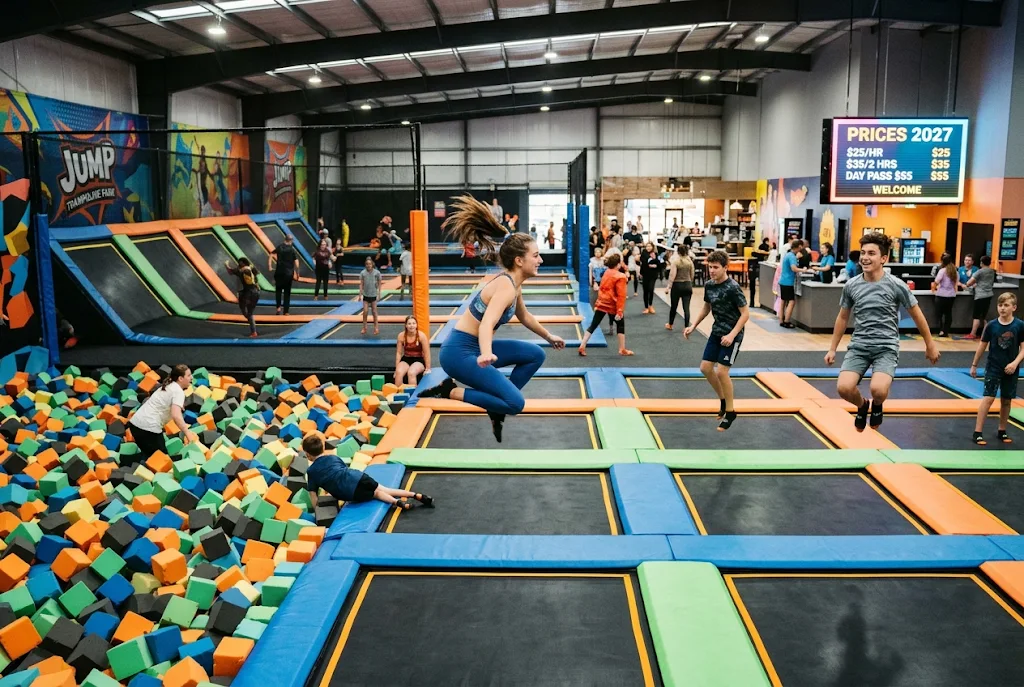
- Access to the open trampoline zone and common attractions (foam pit, basketball, dodgeball)
- A safety briefing from staff
- Free entry for a parent accompanying a very young child, at parks that offer it
Usually extra:
- Anti-slip socks. Most parks won’t let you jump without grippy socks, and they’re sold at reception for a small fee. They’re reusable, so keep them for next time.
- Lockers. A coin or card locker for your bag and shoes.
- A refundable wristband deposit of around 500 ₽ at some venues, returned on exit.
- Coaching or classes. Freestyle, acrobatics, and trampoline-fitness sessions with an instructor are priced separately from open jumping.
None of these are large on their own, but together they can add 300–800 ₽ to a visit, so budget for them rather than being surprised at the till.
What Affects Jump Trampoline Park Prices
Two people can pay very different amounts for what looks like the same visit. These are the factors that move the number.
City and location
Moscow and St. Petersburg sit at the top of the range. Parks inside major malls pay high rent and pass that on. The same session in a smaller city, or at a standalone park on the outskirts, is often cheaper.
Day and time of your visit
Weekday mornings and early afternoons are the cheapest windows. Prices climb for evenings, weekends, school holidays, and special events like Friday-night glow sessions, when some arenas turn into a music-and-lights party and charge a premium.
Session length
Longer blocks cost more in total but less per minute. If your group genuinely wants to stay two hours, a longer or unlimited ticket usually beats buying two separate sessions.
Age and who’s jumping
Some parks have cheaper toddler sessions and let one parent in free with an under-6. Adults and teens pay full rate. A handful of places run family tickets that work out cheaper per head.
Group size
Booking as a group is the single biggest saving. School and team rates around 450–500 ₽ per person for 10 or more jumpers are common when arranged in advance, and large families can sometimes get around 10% off on proof of status.
Birthday Parties and Group Bookings
Birthdays are where the bigger numbers appear, and also where the value can be strongest if you’d otherwise buy a lot of individual tickets.
In Moscow, party packages typically start near 9,000 ₽ for a small family celebration (a few children plus parents) and climb to 15,000–22,000 ₽ for a fuller package covering a set number of jumpers plus guests. Those usually bundle a private area or table, jump time, a host, and sometimes food or a cake. If you’re hosting more than six or seven kids, a package almost always costs less than separate tickets and socks for everyone.
Before you book, confirm exactly how many children are covered, whether extra guests are charged per head, and what happens if someone cancels.
How Russian Prices Compare Internationally
Trampoline park pricing isn’t the same across countries, so comparisons are rough at best. A park like Xtreme Jumping in Mérida, Mexico operates on a completely different cost base, currency, and local market, which makes a direct ruble-to-peso comparison misleading. The useful takeaway is simpler: wherever you are, the model is the same — you’re paying for timed jump sessions, with socks and deposits on top, and weekends cost more than weekdays. Judge value against local parks, not foreign ones.
How to Save Money on a Trampoline Park Visit
A few small habits bring the total down without spoiling the day:
- Go on a weekday. Mornings and early afternoons are the cheapest slots and the arena is quieter, which means more actual jumping.
- Bring your own grip socks. Reuse the pair you bought last time instead of paying again.
- Book online in advance. Some parks discount pre-booked tickets and many sell out peak slots.
- Travel as a group. Even a casual group of friends can hit the discounted 10+ rate if you book together.
- Watch for seasonal promotions. Off-season and mid-week offers, loyalty passes, and multi-visit bundles appear regularly on park sites and apps.
- Skip the extras you won’t use. If you’re staying an hour, you don’t need the unlimited ticket.
Is a Jump Trampoline Park Worth the Price?
For an hour of genuine physical activity that kids and adults both enjoy, the cost usually compares well with a cinema trip or an amusement park. The value depends on how long you stay active and how busy the park is — a crowded weekend slot gives you less real jump time per ruble.
Safety is part of value too. Trampoline jumping carries a real injury risk, especially for younger children and on crowded courts. It’s worth reading the park’s rules, following staff instructions, and keeping small children in age-appropriate zones. For balanced, independent guidance, parents can check trampoline safety advice from the American Academy of Pediatrics and injury-prevention resources from the Royal Society for the Prevention of Accidents before deciding whether a visit suits their family.
The Bottom Line
For 2027, budget roughly 800–1,500 ₽ per person for a standard session at a Russian jump trampoline park, plus a little extra for socks and a deposit. Weekends and premium parks push that higher; weekday visits, group bookings, and advance tickets pull it down. Prices move year to year, so confirm the current rate on the park’s own website or app before you set out — and if you’re planning a party, a package will almost always beat buying tickets one by one.
FAQ
How much does a trampoline park cost per person in Russia? Most standard one-hour sessions cost about 800–1,200 ₽ per person in big cities, with short sessions from around 400 ₽ and unlimited slots up to roughly 1,500 ₽. Regional cities are usually cheaper.
Do I have to pay extra for socks? Usually, yes. Most parks require anti-slip socks and sell them at reception for a small fee. They’re reusable, so bring the same pair next time to avoid paying again.
Is there a deposit at trampoline parks? Some parks take a refundable wristband or bracelet deposit of around 500 ₽, returned when you leave. Policies vary, so check at the entrance.
What’s the cheapest time to go? Weekday mornings and early afternoons. Evenings, weekends, holidays, and special glow nights cost more and are more crowded.
Are birthday packages better value than individual tickets? For groups of around seven children or more, packages (from roughly 9,000 ₽ up to 15,000–22,000 ₽ for larger ones) typically work out cheaper than separate tickets, socks, and a table.