You press play and hear a tiny blip: a snare hit, a breath, half a synth chord. You’re sure you know it. Then the name won’t come. That’s the whole appeal of Songless, and also why it can be so frustrating.
Here’s the short answer. To guess songs in fewer tries on Songless, listen for the texture of the sound before the melody, use headphones in a quiet room, replay the first clip several times, and work out the decade from how the track is produced. Don’t waste a skip when you already have a reasonable guess, and practice your weak genres in unlimited modes between daily rounds. The rest of this guide explains each tip and how to use it.
How Songless Works (and Why the First Clip Matters Most)
Songless is a music guessing game. You hear a very short slice of a song and try to name it in as few attempts as possible. The original version by Lessgames is built around one idea: you know the song, but can you name it from only 0.1 seconds? Each wrong guess or skip gives you a longer clip.
The format grew out of Heardle, the Wordle-style music game that was popular in 2022. Heardle played clips that grew from 1 to 16 seconds over six guesses. Spotify bought it in July 2022 and shut it down in April 2023. Songless starts much shorter, which is why it feels harder and why early-clip skills count for so much.
One practical note: many sites and apps now use the Songless name. Some are unofficial copies, some charge for full song libraries, and their clip lengths, song pools and rules differ. The tips below work across most versions, but check how yours handles skips and replays.
Why a Tiny Clip Is Enough
It’s fair to wonder whether anyone can really name a song from a fraction of a second. Research says yes, more often than you’d expect.
In a 1999 study from the University of Toronto, listeners matched 100- and 200-millisecond excerpts of popular recordings to song titles. They did better than chance at both lengths, much better at 200 ms. The interesting part was what made the difference. Performance dropped to chance when the clips were played backward or when the high-frequency sound was filtered out. Removing the bass made no difference.
So in a first clip, your brain isn’t mainly using melody. It’s using the sound itself: the bright, shifting detail of the instruments, the voice and the production. That’s what the first few tips build on.
10 Songless Tips to Guess in Fewer Tries
1. Listen for Texture, Not Tune
A 0.1-second clip has no melody you can follow. Ask what the sound is made of instead. Is it a distorted guitar, a bright piano, a breathy voice, or a crisp electronic hi-hat?
Picture the sound as a color or a material: glassy, fuzzy, metallic, warm. That one-word label often points you to a genre and an era before the title comes to you.
2. Use Headphones and Turn the Volume Up
Since high-frequency detail matters so much in short clips, phone speakers work against you. They lose a lot of the crisp top end that helps you recognize a recording.
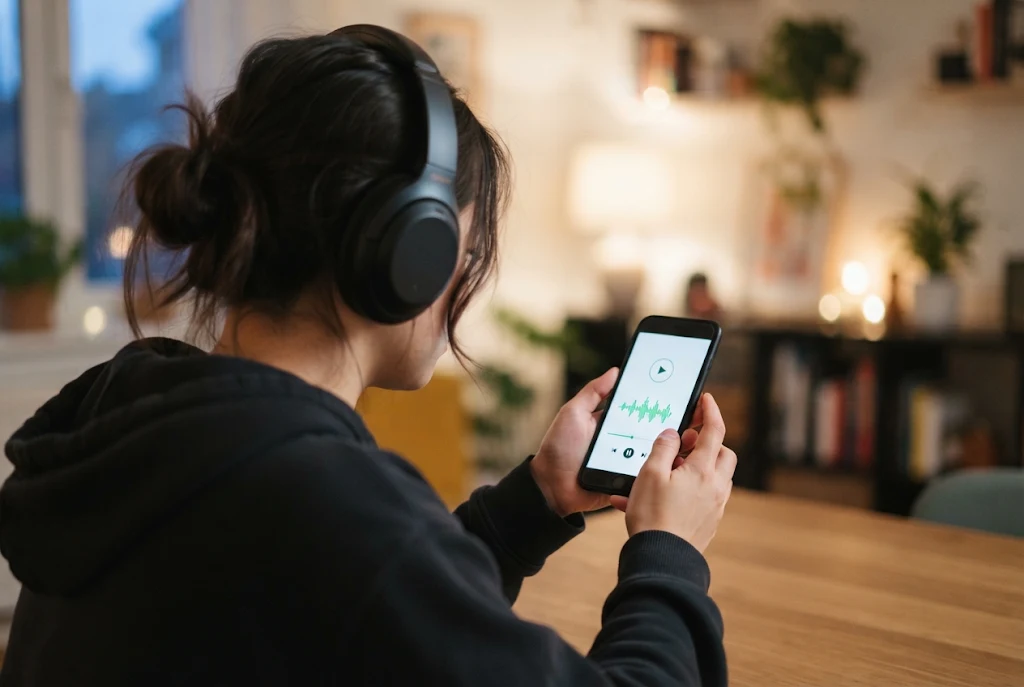
Wired or wireless earbuds in a quiet room give you a real advantage. Turn the volume up a bit more than you normally would. A half-second clip is over before your ears adjust.
3. Replay the First Clip Before You Guess
If your version lets you replay a clip, do it three or four times. The first listen usually just tells you that something played. The next few let you pick out details: is there a voice, is it a chord or a single note, does it sound live or produced?
Many players lose a guess because they react on the first listen. Slowing down costs you nothing.
4. Date the Song by Its Production
Recording styles change from decade to decade, and you can often hear that even in a tiny clip. Some rough clues:
| What you hear | Era it often points to |
|---|---|
| Big, booming, reverb-heavy drums | 1980s |
| Raw, distorted guitars with a muddy low end | 1990s rock and grunge |
| Glossy pop vocals with obvious pitch correction | Late 2000s to 2010s |
| Fast, rattling trap hi-hats | 2010s to 2020s hip-hop and pop |
| Warm, slightly hissy analog sound | 1960s and 1970s |
These are tendencies, not rules. Plenty of modern artists copy older sounds on purpose. Still, narrowing it to one decade cuts your list of possible songs a lot.
5. Start With the Biggest Hits
Daily music games usually pick songs that lots of people know, not deep cuts. When you’re torn between two possible songs, the more famous one is often the better first guess.
This depends on the version, though. Genre, artist and decade modes have their own song pools. If you’re playing a 1970s mode, think about the biggest songs of that decade, not today’s charts.
6. Don’t Skip When You Have a Reasonable Guess
In many Songless versions, a wrong guess and a skip cost the same: you lose one attempt and get a longer clip. If that’s how yours works, skipping wastes a chance to be right.
If you have even a reasonable guess, type it in. If you truly have nothing, skip and let the longer clip do the work. Check your game’s rules once so you know which way it goes.
7. Use the Search Box as a Memory Aid
Most versions make you pick your answer from a dropdown list of songs. You can use that list fairly to jog your memory.
If you think it’s a certain artist but can’t name the track, type the artist’s name and scroll through what appears. Seeing the titles often brings the right one back. This is just how the game’s own search works, not a cheat.
8. Play the Next Second in Your Head
Once a clip is a second or two long, try to “continue” it in your head. Hum what you think comes next. If the continuation feels natural, you’re probably close.
This works well for intros you’ve heard hundreds of times. Often you’ll remember the next lyric before you remember the title, and the lyric is enough to search.
If you’re playing with friends, say your half-memory out loud: “it’s the one that goes into a big drum fill.” Someone else often finishes the thought, and you’ll remember that intro next time.
9. Practice Your Weak Spots in Unlimited Modes
The daily puzzle gives you one song a day, which isn’t much practice. Many Songless sites also offer unlimited play sorted by decade, genre or artist.
Notice where you struggle. If you keep missing 1990s R&B, spend ten minutes on that mode. Short, focused practice helps more than random rounds.
Unlimited play is also a good way to try out the other tips with nothing at stake. Try guessing only from the first clip for a whole session, even if you get most wrong, and see how often your decade guess is right. You’ll get a feel for how far texture alone can take you.
10. Keep a Log of the Songs You Miss
After each daily round, write down the songs you missed and the clue you overlooked. Then play the first ten seconds of the real track and listen for that opening sound.
Over a few weeks you’ll see your blind spots. Maybe it’s songs that open with a vocal, or certain producers. Fixing a pattern does more for your score than learning one song at a time.
What to Listen For as the Clips Get Longer
Each extra second gives you a different kind of clue. Knowing what to listen for at each stage keeps you from straining for a melody that isn’t there yet.
| Clip length | What you can realistically pick up | What to do with it |
|---|---|---|
| Under half a second | Texture, a single instrument or voice, rough era | Name the sound and guess the decade |
| About 1 second | A chord, a drum pattern, or the first syllable | Narrow it to a genre and a few artists |
| 2 to 4 seconds | The start of a riff, beat or vocal line | Hum the next bar and test it against your shortlist |
| 5 seconds or more | Enough melody or lyrics to search for | Type the artist or a likely title into the search box |
Exact clip lengths vary between versions, so treat this as a rough guide. The idea stays the same: use texture early, rhythm in the middle, and melody and lyrics late.
A Quick Example
Say the first clip is a short, bright burst of distorted guitar with a little hiss. That points to rock, probably from the 1970s to the 1990s. On the second clip you hear a heavy, steady drumbeat start, which tilts you toward arena rock or grunge. By the third clip a riff begins. Now you can hum it, check two or three likely bands in the search list, and pick one.
You didn’t need the chorus. You built up the answer one clue at a time, which is how strong players usually get it in two or three tries.
Common Mistakes That Cost You Guesses
Even good players lose points in the same few ways:
- Guessing on the first listen. One quick reaction often wastes the most valuable clip.
- Only listening for the melody. At 0.1 seconds there isn’t one. Focus on the sound.
- Ignoring the mode. A decade or genre mode changes which songs are likely.
- Playing through phone speakers in a noisy room. You lose the detail that matters most.
- Skipping on a hunch. If a skip and a guess cost the same, a hunch is worth trying.
A Simple Routine for Each Daily Round
If you want a repeatable way to play, try this:
- Put on headphones and play the first clip at least three times.
- Name the texture (voice, guitar, synth, drums) and guess the decade.
- Type in your best guess, using the search list to check artist names.
- If it’s wrong, listen to the longer clip and hum where it’s going.
- After the round, note any miss and listen to the real intro once.
The whole thing takes about two minutes, and it turns a quick game into steady practice.
Final Thoughts
Getting better at Songless is less about knowing every song and more about how you listen. Focus on texture in the first clip, date the track by its production, and don’t throw away attempts on skips you don’t need. Pair that with a little practice on your weak genres and you’ll probably need fewer tries within a couple of weeks. Start with tomorrow’s daily song: put on headphones and replay that first clip before you type anything.
Frequently Asked Questions
How short is the first clip in Songless?
It depends on the version. The original Lessgames version is built around a 0.1-second opening clip, while some multiplayer versions start at around half a second. Each wrong guess or skip makes the clip longer.
Is Songless the same as Heardle?
No. They’re similar games, but Songless usually starts with a much shorter clip. Heardle used clips of 1 to 16 seconds and was shut down in 2023.
Does skipping count as a guess in Songless?
In many versions, yes. A skip uses up an attempt just like a wrong answer. Check your version’s rules, but if they cost the same, it’s usually better to guess.
Can you play Songless more than once a day?
The daily puzzle is one song per day. Many Songless sites also have unlimited modes sorted by genre, decade or artist, so you can keep practicing.