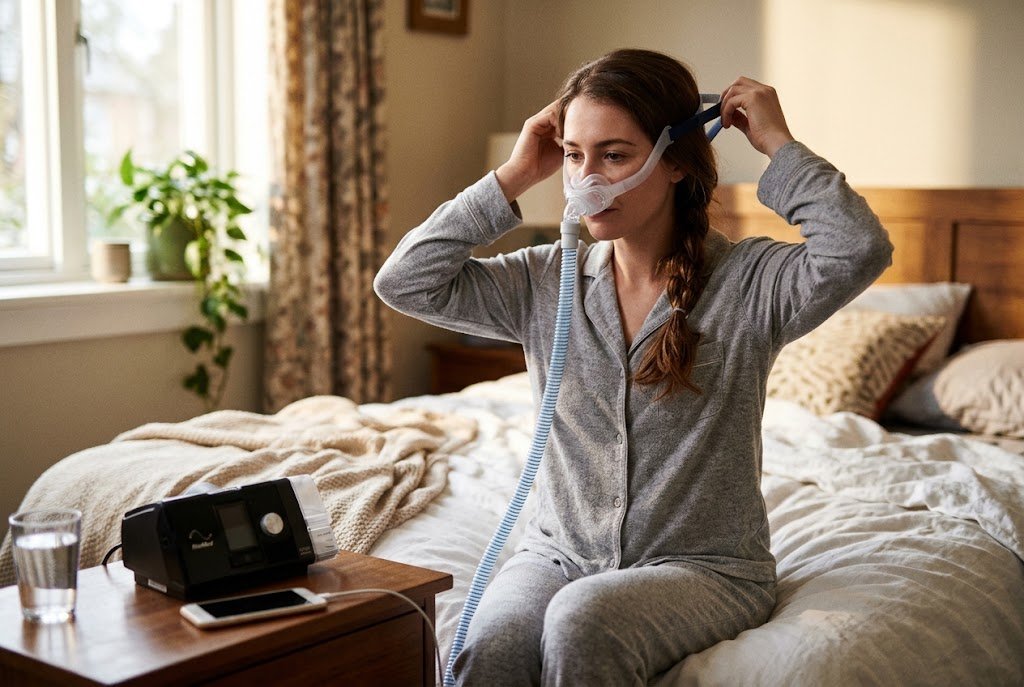
Most CPAP problems come down to four things: a mask that fits badly, pressure that feels wrong, air that’s too dry, or equipment that needs cleaning or replacing. The good news is that many of them can be fixed with a small change, such as a different mask style, more humidity, or a settings review with your care team.
If sleep apnea continuous positive airway pressure therapy has left you with a sore nose, a dry mouth, or a mask on the floor at 3 a.m., that doesn’t mean the treatment has failed. This guide helps you match what you’re feeling to the likely cause, try the safe fixes first, and spot the problems that need a call to your doctor.
One rule before you start: don’t change your prescribed pressure on your own. Comfort settings are usually fine to explore, but the pressure itself should be set by your provider.
Why Sleep Apnea Continuous Positive Airway Pressure Feels Hard at First
CPAP asks you to do something unnatural: fall asleep with a mask on your face while pressurized air flows into your airway. That air acts like a splint, holding your throat open so it doesn’t collapse while you sleep.
The National Heart, Lung, and Blood Institute says that getting used to CPAP can take time and patience. So a rough first week is normal. A problem that stays the same after a few weeks usually isn’t something you just have to put up with. It’s a sign that something needs adjusting.
Quick Guide: Match Your Symptom to the Likely Fix
Start here, then jump to the section that fits.
| What you notice | Likely cause | First thing to try |
|---|---|---|
| Hissing, air on your face | Mask leak | Refit the mask while lying down with the air on |
| Red marks or sores | Straps too tight or wrong size | Loosen the straps, then check your mask size |
| Dry mouth on waking | Mouth breathing or a mouth leak | Raise the humidity, ask about a chin strap or full face mask |
| Stuffy nose, nosebleeds | Dry air | Use the heated humidifier, try a saline spray |
| Dry, irritated eyes | Air leaking from the top of the mask | Reseat the mask or try a different size |
| Gurgling or water in the hose | Condensation | Insulate the hose or ask about heated tubing |
| Bloating, belching | Swallowed air | Call your provider for advice |
| Feeling of too much air | Pressure or ramp settings | Ask your provider to review your settings |
| Mask off by morning | Discomfort or a blocked nose | Find the discomfort that’s waking you |
| Still exhausted after weeks | Leaks, short use, or something else | Check your data with your provider |
Mask Problems
Mask trouble is usually the first complaint, and it’s often the easiest to solve. It’s also worth fixing quickly, because a small leak can trigger other problems, like dry eyes and a dry mouth.
Air Leaks Around the Mask
The natural reaction to a leak is to pull the straps tighter. That often makes things worse, because over-tightening can crease the cushion and break the seal.
Try this instead:
- Loosen the straps slightly.
- Lie down in your usual sleeping position.
- Turn the machine on, since masks are designed to seal with air flowing.
- Gently pull the mask away from your face and let it settle back into place.
- Adjust the straps only until the leak stops.
A mask that fits perfectly while you’re sitting up in the bathroom may leak once your head is on the pillow. If you’re a side sleeper, your pillow may be pushing the mask out of place. A CPAP pillow with cutouts, or a different mask style, may help.
Also look at the cushion itself. Facial oils wear it down over time, so a mask that sealed well a few months ago may simply need a new cushion. Weight changes and dental changes can affect fit too.
Red Marks, Sores, and Rashes
Faint lines that fade soon after you wake up are common. Sores, broken skin, or marks that last for hours are not something to ignore.
Often the fix is a different fit or style, along with mask liners that sit between the cushion and your skin. Barrier creams can also help, but check that they’re safe for your mask material, because some products can damage silicone. Wash your face before bed and wipe the cushion daily so oils don’t build up.
An itchy, red rash that follows the shape of the cushion may be a reaction to the material. Some people react to silicone, so let your provider know and ask about other options.
Feeling Trapped or Claustrophobic
This is more common than people admit, and it’s a reason many give up early. If a full face mask feels too much, ask whether nasal pillows would work for you. They sit at the nostrils and leave more of your face uncovered.
Practice helps as well. Wear the mask for a short time during the day while you read or watch TV, first without the air and then with it. You’re teaching your brain that the mask is safe when you’re relaxed, rather than meeting it for the first time when you’re tired.
Pulling the Mask Off in Your Sleep
Waking up with the mask on the floor and no memory of removing it usually means something bothered you during the night. Common triggers include a blocked nose, pressure that feels too high, a leak, or a dry throat.
Notice when it happens. If it’s always near morning, the mask may have shifted as you changed position. If it’s soon after you fall asleep, the pressure or the ramp setting may be the issue. That detail is useful to bring to your provider.
Air Pressure Problems
The Air Feels Too Strong
Exhaling against steady pressure can feel strange at first. Many machines have a ramp feature that starts at a lower pressure and builds up as you fall asleep. Some also ease the pressure slightly as you breathe out.
If that isn’t enough, your provider may suggest different settings or another type of machine. An auto-adjusting device (APAP) changes pressure through the night, while a bilevel device (BiPAP) uses a lower pressure when you exhale. Those are prescription decisions, so they’re worth raising at your next appointment rather than working around them.
Here’s one thing that surprises people: the ramp can sometimes be the problem. If it starts too low, you may feel like you aren’t getting enough air. If that sounds like you, mention it.
Bloating, Burping, and Gas
Swallowing air, known as aerophagia, can leave you bloated or gassy in the morning. Don’t treat this one as a minor annoyance. The NHLBI advises that if you have stomach discomfort or bloating, you should stop using the machine and call your healthcare provider right away.
Your provider may look at your pressure settings or suggest a different device. Don’t try to solve this by lowering the pressure yourself.
Dryness, Congestion, and Water in the Hose
Dry Mouth
Dry mouth usually means air is escaping through your mouth. This can happen with a nasal mask if your mouth falls open, or with a full face mask that leaks.
Options include raising the humidifier setting, asking about a chin strap, or switching to a full face mask if you breathe through your mouth at night. If your nose is often blocked, fix that first, because a stuffy nose can be what’s making you breathe through your mouth.
Stuffy Nose, Runny Nose, and Nosebleeds
Moving air dries out your nasal passages, and your body can respond by making more mucus or becoming congested. A heated humidifier is usually the first thing to try, and a saline spray at bedtime may help too.
If you have allergies or a cold, tell your provider, since congestion can make therapy much harder. Frequent nosebleeds also deserve a call.
Dry or Irritated Eyes
If your eyes feel sore in the morning, air is probably leaking from the top of the mask. Reseat the mask while lying down and check the size. A bed partner may even notice the leak before you do, so it’s worth asking them.
Gurgling or Water in the Mask
Condensation, sometimes called rainout, happens when warm, humid air cools inside the hose. It’s more common in a cold bedroom. Your options include:
- Turning the humidity down a little
- Using heated tubing, if your machine supports it
- Putting an insulated cover on the hose
- Placing the machine lower than your head, so water doesn’t run toward the mask
Machine and Noise Problems
Most modern machines are quiet, so a new noise usually means something has changed. Before you assume the device is failing, check these simple things:
- Is the filter dirty or clogged?
- Is the hose fully connected at both ends?
- Is the water chamber seated correctly?
- Does the hose have a small tear?
- Is the mask’s exhalation vent blocked by bedding?
If the machine won’t start, check the power cord and outlet, then contact your equipment supplier. Keep their phone number and your machine’s model details somewhere easy to find.
Still Tired on CPAP?
Feeling tired after weeks of regular use is frustrating, but there are several possible reasons. You may be wearing the machine for too few hours, leaks may be weakening your treatment, or your pressure may need reviewing.
Most modern machines record usage and treatment data, which your provider can review. They may look at your apnea-hypopnea index (AHI), which counts breathing events per hour, along with leak levels and hours of use. Ask what the numbers mean for you.
Tiredness can also have causes that CPAP won’t fix, including other sleep disorders, medications, depression, thyroid problems, or simply not getting enough sleep. That’s why it’s worth bringing up instead of assuming the treatment doesn’t work.
Simple Habits That Prevent Many Problems
A lot of comfort issues with sleep apnea continuous positive airway pressure therapy trace back to worn or dirty gear. The NHLBI recommends cleaning your mask and tube every day and refilling your supplies on time. A simple routine might look like this:
- Daily: Wipe the cushion and empty the water chamber. Follow your manual for cleaning the mask and tube.
- Weekly: Wash the removable parts in warm, soapy water and let them air-dry out of direct sunlight.
- As directed: Clean or replace filters on the schedule your manufacturer gives.
For the humidifier, follow your manual. Many manufacturers recommend distilled water because minerals in tap water can build up in the chamber.
Be careful with automatic cleaning gadgets. The FDA says there are no cleared CPAP cleaning devices and warns that ozone and UV light can break down hoses and masks. It says most accessories can be cleaned with mild soap and water. Just never put a machine with an electrical cord into water.
When to Call Your Doctor or Equipment Supplier
Simple fixes are worth trying, but some situations call for professional help. Contact your provider if you have:
- Bloating or stomach discomfort
- Skin sores that don’t heal
- Frequent nosebleeds or ongoing congestion
- Morning headaches that keep happening
- Daytime sleepiness that hasn’t improved
- Trouble using the machine for several nights in a row
Get urgent medical care for chest pain, severe trouble breathing, or any symptom that feels like an emergency.
Call your equipment supplier for mask refits, replacement parts, and machine faults. Before you call, write down what happens, when it happens, and what you’ve already tried. “I wake around 4 a.m. with a leak at the bridge of my nose” is far more useful than “my mask doesn’t work.”
A Note on US Insurance Rules
Don’t quietly stop using your machine if you’re struggling, especially early on. Medicare generally expects at least four hours of use on 70% of nights during the initial trial period, and many private insurers have similar rules. Check with your plan, and tell your provider or supplier quickly if you’re having trouble. Early help gives you the best chance of solving the problem and keeping your coverage.
Don’t Give Up on the First Bad Week
Getting comfortable with sleep apnea continuous positive airway pressure treatment is usually a process of small adjustments, not one big fix. Change one thing at a time, give it a few nights, and keep brief notes, so you can tell what actually helped.
If you’re still struggling after trying the basics, talk to your doctor before you stop. A different mask, new settings, or another treatment may be a better fit, and untreated sleep apnea carries health risks of its own. Your next step can be as simple as booking a mask refit.
Frequently Asked Questions
How long does it take to get used to CPAP?
It varies from person to person. Some people adjust within days, while others need several weeks. If you aren’t improving after a few weeks, ask your provider or supplier for help.
Why does my CPAP mask leak all of a sudden?
A worn cushion is a common cause, particularly if the mask used to fit well. Loose headgear, a new sleeping position, and weight changes can also affect the seal.
Can I use CPAP with a cold?
Many people can, though congestion may make it harder. A humidifier or saline spray may help. If you can’t breathe comfortably through your mask, ask your provider what to do.
Is it normal to feel worse when starting CPAP?
Some people sleep poorly at first while they get used to the mask and the air pressure. If you feel worse after a few weeks, or you have troubling symptoms, contact your provider.
Can I skip a night of CPAP?
Your symptoms can return quickly without treatment, so regular use matters. If you often skip nights because of discomfort, tell your provider so they can help fix the cause.