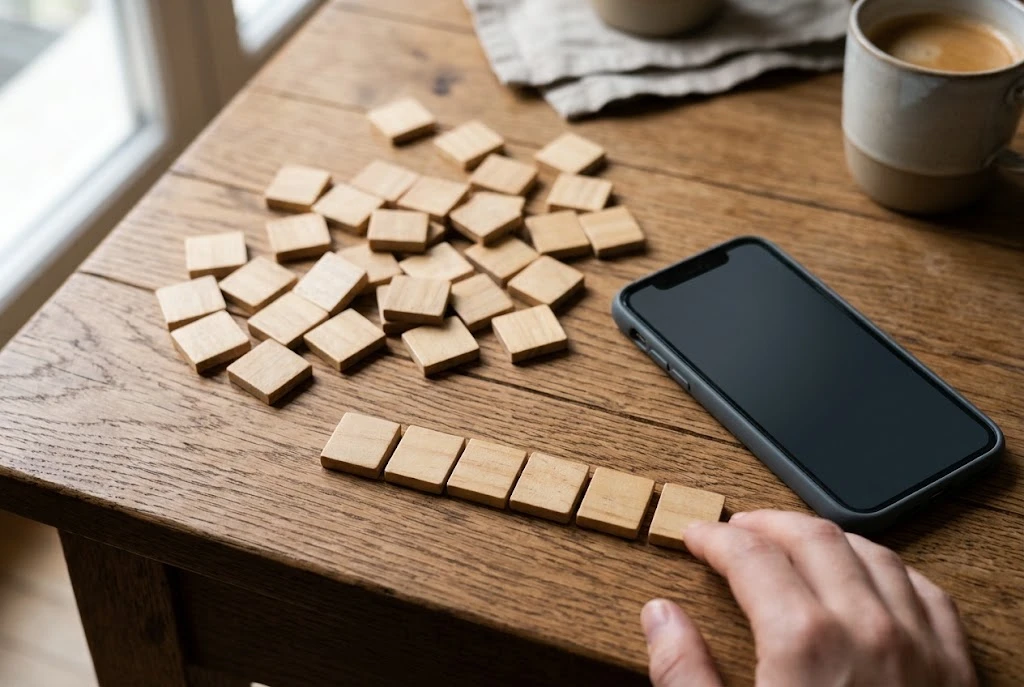
Stuck on a jumble of letters that refuses to turn into a word? An anagrammeur is the quickest way out. It’s an anagram generator: you feed it a scrambled set of letters, and it hands back every real word those letters can spell. To solve anagrams fast, type your letters into the tool, choose the right language and word length, then scan the shortlist it produces. That’s the whole trick in one sentence. The rest of this guide shows you how to do it well, filter smarter, and avoid the mistakes that slow most people down.
What an Anagrammeur Actually Does
An anagram is a word or phrase made by rearranging the letters of another, using each letter exactly once. “Listen” becomes “silent.” “Dormitory” becomes “dirty room.”
An anagrammeur is simply the tool that finds those rearrangements for you. The word itself is French, and it’s become a common label for anagram generators, which matters if you’re in Canada and bounce between English and French puzzles. Some tools call it an “anagram solver” or “word unscrambler,” but they do the same job: take your letters, compare them against a dictionary, and return the combinations that are actually valid words.
The key thing to understand is that a good generator checks against a word list. It won’t invent nonsense. If you enter seven letters and get back a clean list of five- and six-letter words, those are real entries in whatever dictionary the tool uses. That’s also why the same letters can give different results on different sites, since each one leans on its own word list.
How to Use an Anagrammeur: Step by Step
The process is short, but a few settings make the difference between a tidy answer and a messy wall of words.
- Pick a tool. Most are free and browser-based, so there’s nothing to install. More on specific ones below.
- Enter your letters. Type the scrambled letters with no spaces. For a phrase, most tools let you paste the whole thing and will ignore spaces and punctuation.
- Set the language. This is the step people skip. An English dictionary won’t recognise French words and vice versa, so pick the language that matches your puzzle before you hit search.
- Add wildcards if you have blanks. Playing Scrabble with a blank tile? Use the wildcard symbol (usually
?or*) in place of the blank, and the tool will test every letter in that slot. - Filter the results. Set a minimum or maximum word length, or tell the tool which letter the answer starts or ends with. This is where “fast” actually happens.
- Validate before you commit. If it’s for a rated game, double-check the word against the official dictionary for that game. Tool word lists aren’t always identical to tournament lists.
Follow those six steps and you’ll go from a pile of letters to a usable answer in well under a minute.
Speed Techniques to Solve Anagrams Faster
Anyone can paste letters in and read the output. The people who solve anagrams fast are the ones who narrow the list before they read it. Here’s how.
Filter by length first. If a crossword clue has six boxes, set the length to six and everything else disappears. You’re no longer scrolling past dozens of three-letter words you don’t need.
Lock in letters you already know. Many generators let you specify a starting letter, an ending letter, or a letter in a fixed position. In a Wordle-style puzzle where you know the word starts with “C,” that one filter can cut the results by more than half.
Think in prefixes and suffixes. English leans heavily on endings like -ing, -ed, -ers, and -tion. If you can spot that your letters contain -ing, you only have to rearrange what’s left. A good tool lets you search by “contains” to force those patterns.
Use wildcards deliberately. Blanks are powerful but they flood your results. Add one wildcard at a time rather than two, read what comes back, then decide.
| Filter | When to use it | What it does |
|---|---|---|
| Word length | Crosswords, fixed-length slots | Removes every word of the wrong size |
| Starts/ends with | You already have one letter | Cuts the list sharply |
| Contains letters | You spotted a prefix or suffix | Forces useful patterns |
Wildcard (? / *) | Scrabble blanks | Tests every possible letter in that spot |
| Language | Bilingual or French puzzles | Matches results to the right dictionary |
Stack two or three of these and even a long, awkward set of letters resolves quickly.
Using an Anagrammeur for Word Games
The tool earns its keep across most popular word games, though the rules about using it change from one to the next.
Scrabble and Words With Friends
This is the classic use. Enter your rack, add a wildcard for any blank, and look for the highest-scoring play. Set a minimum length of five or six letters when you’re hunting for a bonus word. Keep in mind that Canadian and international play often uses the Collins word list, while North American tournaments lean on a different one, so a word that scores in a casual game might not be valid in a rated match.
Wordle and Daily Puzzles
For Wordle and similar guessing games, an anagrammeur works best once you’ve locked in a couple of letters. Enter the letters you’ve confirmed, set the length to five, and filter by position. It’s less about raw anagramming here and more about narrowing possibilities with the clues you already have. Many players treat this as a last resort rather than a first move, to keep the puzzle fun.
Crosswords and Cryptic Clues
Cryptic crosswords often hide an anagram inside the clue, flagged by words like “mixed,” “broken,” or “confused.” Once you spot the anagram indicator and the letters it points to, drop them into the tool with the answer length set, and the solution usually surfaces fast.
Best Anagrammeur Tools to Try
A few well-known options cover most needs, and the good ones are free:
- dCode’s anagram generator is flexible, supports multiple languages, and handles wildcards and advanced filters well. Useful if you switch between English and French.
- General anagram solvers and word unscramblers aimed at Scrabble players tend to show point values alongside each word, which saves a step during a game.
- Bilingual and French-first tools are handy in Canada when the puzzle is in French, since they default to a French dictionary.
Try two or three and keep the one whose filters feel natural. Results overlap, but the interface and the word list behind each tool are where they differ.
Common Mistakes to Avoid
A few habits quietly slow people down or lead them astray:
- Using the wrong language dictionary. An English generator will never find a valid French word. Check the language setting first, every time.
- Trusting the word list blindly. Tools draw from different dictionaries. For anything rated or competitive, confirm the word against the game’s official list.
- Ignoring filters. Reading hundreds of results by eye is the slow way. Set a length or a known letter and let the tool do the narrowing.
- Forgetting that an anagram uses every letter. Some tools also show shorter sub-words. If you specifically need a true anagram, filter to the full letter count.
- Leaning on it during competitive play. Most tournaments and many friendly groups consider this cheating. Use it to practise and learn patterns, not to win a rated game.
English and French: A Canadian Note
Because Canada runs on two official languages, the word “anagrammeur” shows up more here than in most English-speaking regions, and bilingual word games are common. The practical takeaway is simple: match the tool’s language to the puzzle. A dictionary set to English won’t validate “maison,” and a French setting won’t recognise “house.” Most solid tools let you switch languages in a single click, so keep that toggle in mind when a puzzle jumps from one language to the other.
Conclusion
An anagrammeur turns a frustrating jumble into a short, readable list of real words, and the speed comes from your settings rather than the tool itself. Pick the right language, set a word length, lock in any letters you already know, and use a wildcard for blanks. Do that and most anagrams fall apart in seconds. Treat it as a way to learn patterns and sharpen your own eye, and over time you’ll reach for it less, because you’ll start spotting the words before the tool does.
FAQ
Is using an anagrammeur considered cheating? In casual play, that’s up to the group. In rated tournaments and official matches, using any solver during a game is against the rules. It’s fine for practice, studying word lists, or settling a disagreement after the game ends.
Why do two anagram tools give different answers? Each tool checks your letters against its own dictionary. One might include obscure or regional words another leaves out, so the lists won’t always match. For official play, the game’s own word list is the one that counts.
Can an anagrammeur handle full phrases, not just single words? Yes. Most generators accept phrases and ignore spaces and punctuation. Longer inputs produce far more combinations, so use length and starting-letter filters to keep the results manageable.
Do I need to pay for a good anagram tool? No. The widely used generators are free and browser-based. Paid or app versions mainly add convenience, offline access, or an ad-free view rather than better results.
What’s the difference between an anagrammeur and a word unscrambler? Very little in practice. “Anagrammeur” is the French-rooted label, while “word unscrambler” and “anagram solver” are the common English ones. All three describe a tool that rearranges your letters into valid words.


