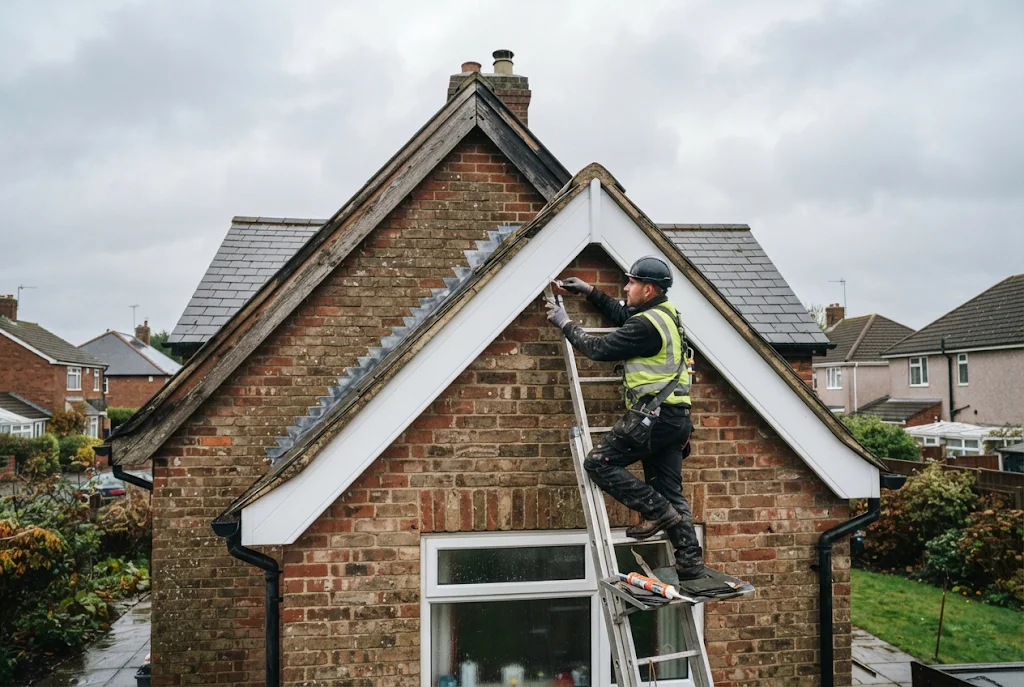
A gable end roof leak almost always starts at one spot: the triangular wall at the end of a pitched roof, where the sloping edge meets the vertical gable. Water usually sneaks in through a rotted bargeboard, a cracked verge, an old gable vent, or failed flashing where the siding meets the roofline. The fix follows the same three moves every time: find the real entry point, remove or dry out what’s damaged, then rebuild and seal the detail so it sheds water again. Small, surface-level problems are often a confident DIYer’s weekend job. Anything structural, high up, or spreading into the framing is a job for a pro. This guide walks through what causes these leaks, how to trace them, and how each fix actually works.
What Is a Gable End?
If you’ve ever drawn a house as a kid — a square with a triangle roof on top — you’ve drawn a gable. The gable end is that triangular section of wall that sits under the two roof slopes at the end of the building.
A few parts matter when you’re chasing a leak:
- Gable wall: the triangular wall itself, which can be brick, timber framing, or siding over framing.
- Bargeboard (or rake board): the angled board running up the slope along the gable edge, covering the exposed ends of the roof timbers. It forms an upside-down “V” at the roofline.
- Verge: the sloped edge of the roof where it overhangs the gable wall. On tiled roofs this is often bedded in mortar or capped with a dry-verge system.
- Gable vent: a louvered vent set into the upper gable wall to let the attic breathe.
- Overhang/outlookers: the short framing that lets the roof project past the gable wall, along with the soffit underneath.
Each of these is a potential water path. Knowing which one failed is half the battle.
Why Gable Ends Leak: Common Causes
Gable ends take a beating. They’re exposed on two sides to wind-driven rain, and the details up there are awkward to reach, so they tend to get installed fast and maintained rarely. Here are the usual culprits.
Rotted bargeboard or fascia
Timber bargeboards soak up moisture over years, especially where paint has peeled. Once the wood goes soft, water travels behind it and into the roof edge. Peeling paint and a spongy board are the early warning signs.
Failed verge or cracked mortar
On tiled roofs, the mortar bedding along the verge cracks and drops out over time. That open edge lets rain run straight under the tiles. Dry-verge clip systems solve this, but older mortared verges are a frequent leak source.
Gable vents letting weather in
A gable vent is a hole in the wall by design, and if its trim, caulk, or louvers fail, rain blows right through. One telltale clue: water stains or compressed, matted insulation sitting directly inside the vent in the attic.
Siding, trim, and house-wrap gaps
The weather barrier behind gable siding is supposed to lap “shingle-style,” with each upper layer over the lower one. When it’s wrapped incompletely or the siding is loose, wind-driven rain finds the gaps. This is one of the most common construction shortcuts on gable faces.
Storm and wind damage
Gable ends are structurally vulnerable because of their shape. Strong wind can push or pull an unbraced gable wall, and failures at the overhang connections can peel back a whole section of roof. You can read more about gable overhang wind failures in Florida’s hurricane retrofit guidance, which documents how these connections give way.
Blocked gutters and the rake edge
Clogged gutters back water up under the roof edge. At the gable’s rake, that overflow runs down the bargeboard and behind the trim, rotting wood from the back where you can’t see it.
How to Find the Source of a Gable End Leak
Water is sneaky. It enters high and shows up somewhere lower, so the stain on your ceiling is rarely directly below the hole. Work the problem in this order before you buy a single tube of sealant.
- Start in the attic. On a dry day, head up with a flashlight and look along the end wall. Trace water stains, rust on nails, or damp framing uphill to the highest wet point. Matted insulation near a gable vent points straight to the vent.
- Check during or just after rain. A live leak is the easiest to pinpoint. If it’s safe, watch where the water first appears while it’s actually raining.
- Inspect from the ground with binoculars. Look for a lifted or rotted bargeboard, missing verge mortar, loose siding, or daylight gaps around the vent. You can learn a lot without a ladder.
- Do a gentle hose test. With a helper watching the attic, run water low on the gable first, then move higher in sections. Isolating the zone that leaks saves you from blind guessing.
Resist the urge to seal the first crack you see. Sealing the wrong spot just moves the problem.
Gable End Roof Repair: Step-by-Step Fixes
Once you know what failed, the repair is usually targeted. Here’s how the common fixes go.
Fixing a rotted bargeboard
For shallow damage — surface cracks or a short soft section — you can often sand back, treat the timber, fill, prime, and repaint. If one end is rotten but the rest is sound, cut out the bad section and splice in a new piece. When most of the board is gone, replace the full length, and swap the soffit at the same time since they interlock. Many homeowners switch to uPVC here because it won’t rot.
Resealing or replacing a gable vent
Remove the old vent and trim, scrape away failed caulk, and pull the nails or screws. Set the new vent with proper flashing behind the top edge and fresh sealant, making sure the housewrap laps over the vent flange and not under it. A new residential gable vent and supplies are relatively inexpensive, which makes this one of the more approachable repairs.
Repairing flashing and siding
Where the gable siding meets the roof slope, step or counter-flashing should direct water out onto the shingles. If it’s loose or missing, that joint leaks. Re-set the flashing so each piece laps over the one below, then re-secure or replace any siding that’s pulled away from the wall.
Rebedding the verge
Rake out the cracked mortar and rebed the verge tiles, or upgrade to a dry-verge clip system that resists cracking and lets the roof breathe. On a tall gable this is scaffold work — not a lean-off-a-ladder job.
Gable End Roof Repair: Repair or Replace?
Most gable leaks are a repair, not a rebuild. A localized problem — one rotted board, a bad vent, a cracked verge — gets fixed in place for a modest cost. Early-stage repairs are cheap, and you rarely need to tear the whole gable apart.
Replacement enters the picture when the damage is structural. If water has been getting in for years and the framing, decking, or the gable truss itself is compromised, patching the surface won’t hold. The same is true after serious storm damage, where the wall may need rebracing to meet wind standards. If you’re unsure whether the framing is sound, that’s the moment to bring in a roofer or structural pro rather than guess.
A quick rule of thumb many contractors use: once repair costs start creeping toward a large share of a full replacement, replacing is worth pricing out — especially on an older roof.
What Gable End Repairs Cost in 2026
Costs swing a lot by region, roof height, material, and how much access gear the job needs. Treat the table below as ballpark US ranges for 2026, not a quote. Always get a written estimate for your specific roof.
| Repair | Typical 2026 US range |
|---|---|
| Bargeboard/fascia section repair | $250–$900 |
| Full bargeboard replacement (one gable) | $600–$1,800 |
| Gable vent repair or replacement | $150–$500 |
| Flashing and siding reseal at the gable | $300–$1,200 |
| Localized gable end repair (labor + materials) | $1,000–$3,000 |
| Structural gable wall rebuild | $4,000–$12,000 |
| Scaffolding or access platform (added) | Varies widely; often $500–$3,000+ |
Two things inflate these numbers more than people expect. Height is one — a two-story or steep gable needs scaffolding, and that’s a line item on its own. The other is hidden rot: once the trim comes off, a “small” repair can grow if water has reached the decking behind it.
How to Prevent Gable End Leaks
Prevention here is cheap compared to a rebuild. A twice-a-year look — spring and fall — catches most problems while they’re still small.
- Keep gutters and the rake edge clear so water can’t back up behind the trim.
- Repaint or reseal timber bargeboards before the paint fails, not after.
- Check gable vent louvers, screens, and caulk each season.
- After any big windstorm, scan the gable from the ground for lifted boards or loose siding.
- Fix soft spots early. A $200 patch now beats a four-figure repair later.
When to Call a Professional
Plenty of gable work is doable from a stable ladder on a single-story home. But some of it isn’t worth the risk. Call a pro when the leak sits high on a two-story gable, when you find damp or cracked framing, after storm damage that may have shifted the wall, or any time the repair means working where a fall is possible. Roofing work at height causes real injuries every year, and a licensed, insured roofer carries the equipment and the liability cover to do it safely.
Conclusion
Gable end leaks look intimidating because they’re up high and out of reach, but the logic is simple: water is getting past one weak detail, and good roof repair means finding that detail and rebuilding it properly. Start in the attic, trace the leak to its highest wet point, and match the fix to the cause — a splice for rotted trim, fresh flashing for a bad joint, a rebedded verge for cracked mortar. Handle the small stuff early, and bring in a professional the moment the job turns structural or dangerous. Your next step: grab a flashlight, check the attic along the end wall after the next good rain, and you’ll usually know exactly what you’re dealing with.
FAQ
How do I know if my leak is coming from the gable end? Look for water stains, rust, or damp framing in the attic along the triangular end wall, and matted insulation near the gable vent. Leaks that show up close to an end wall after wind-driven rain are a strong sign.
Can I repair a gable end leak myself? Minor fixes on a single-story home — resealing a vent, patching trim, clearing gutters — are reasonable DIY jobs if you’re comfortable on a ladder. Save high, steep, or structural work for a pro.
Why does my gable leak only when it’s windy? Gable faces catch wind-driven rain on two sides, so gaps in siding, vents, or the weather barrier that stay dry in normal rain can leak when wind forces water sideways into them.
Should I use timber or uPVC for a new bargeboard? Timber looks traditional but needs regular painting and can rot. uPVC costs more up front but resists rot and needs little maintenance, which is why many homeowners choose it for replacements.
How often should I inspect my gable ends? Twice a year is a good rhythm — once in spring and once in fall — plus a quick look after any major storm.